Riparian Buffers
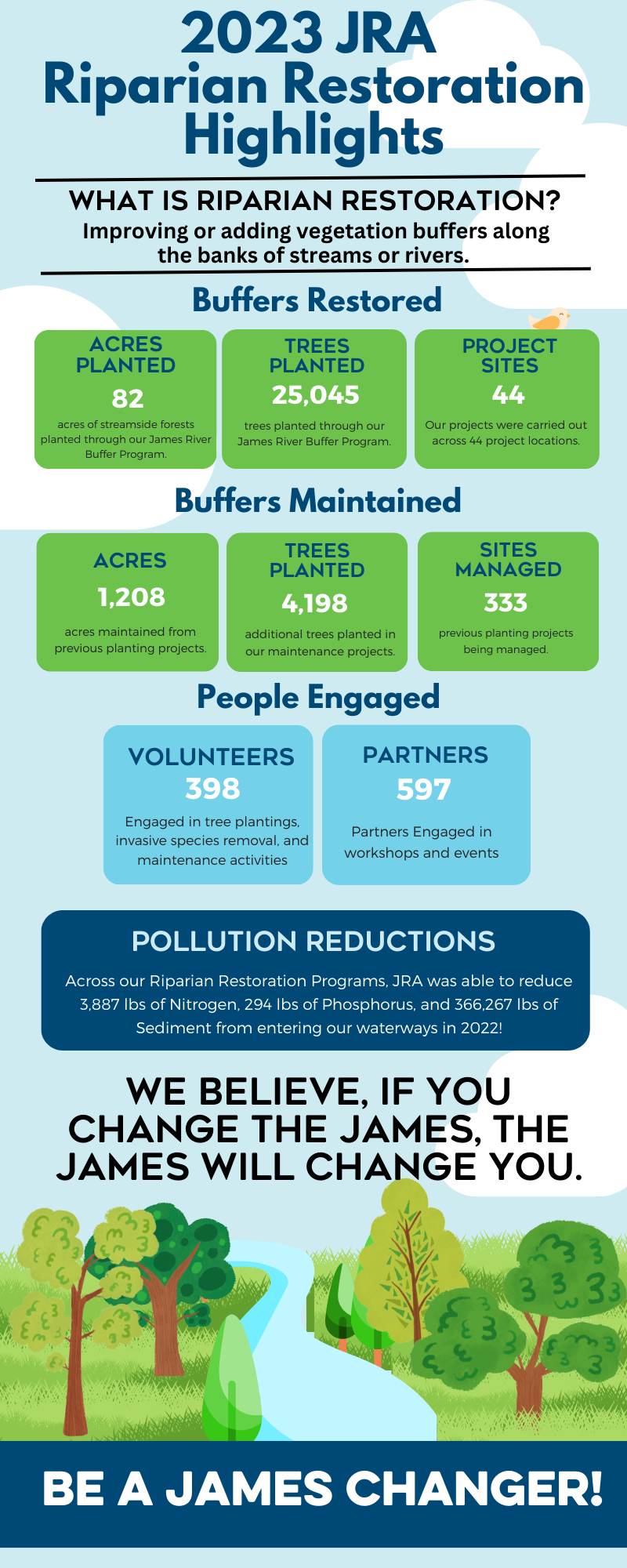
Streamside Forests are recognized as one of the most impactful ‘Best Management Practices’ for the restoration of our waterways.
Watershed Restoration is the process of improving the health and resilience of our entire watershed, which spans over 10,000 square miles that ultimately drain into the James River in Virginia. This comprehensive effort encompasses a range of solutions, including the installation of streamside forests or riparian buffers, urban stormwater mitigation and management techniques, and the protection of tidal areas through living shorelines.
The health of the James River begins on land, and our streamside forests are the river’s first line of defense. These essential natural areas are comprised of the trees, shrubs, and other native vegetation running along the banks of Virginia’s waterways and tributaries.
The Power of Streamside Forests
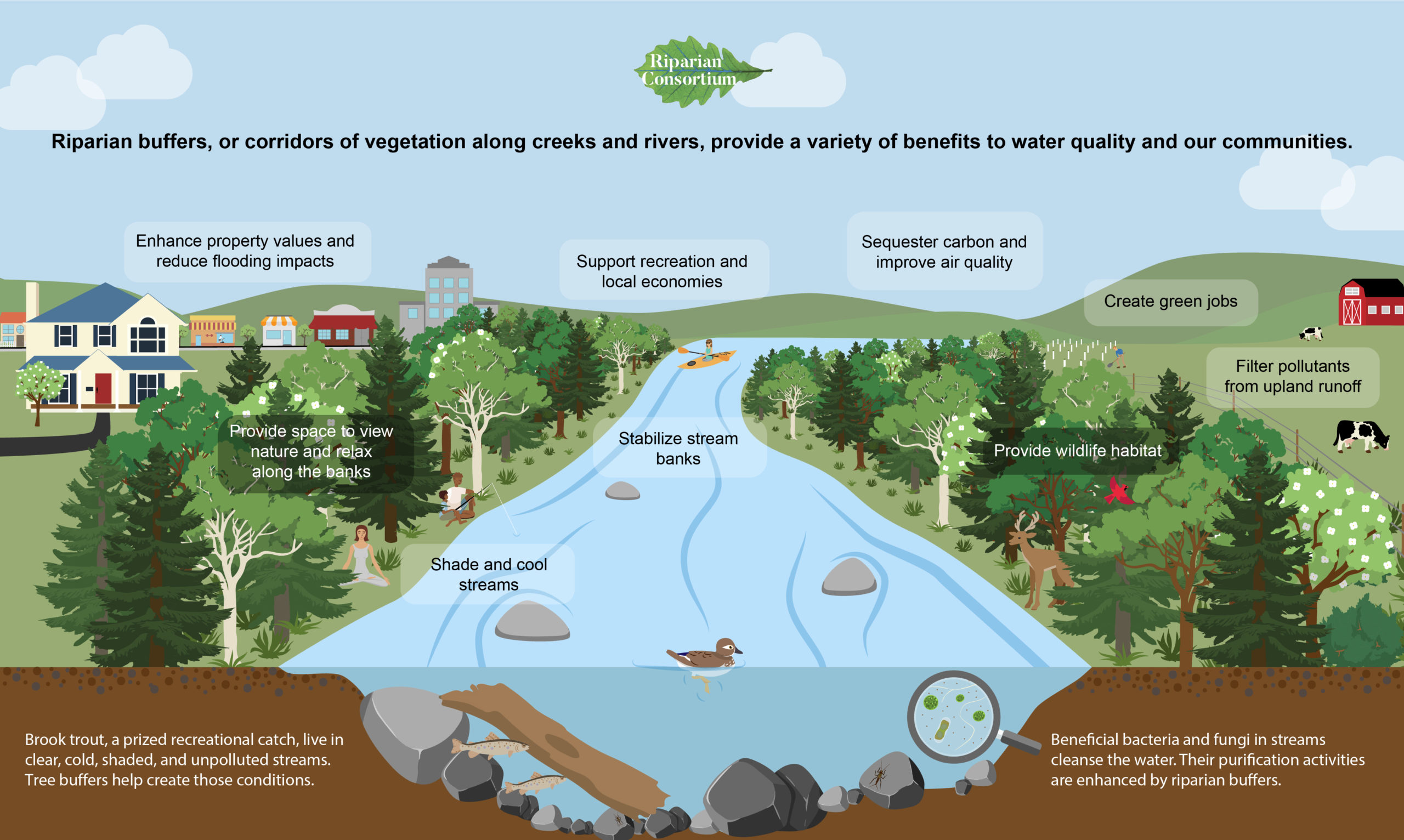
Streamside forests are critical for a thriving, clean James River and its vast watershed. These riparian buffers:

Filter Pollution
The roots and soil act as a natural sponge and filter, trapping excess nutrients and sediment from stormwater runoff before they reach the river—a key step in watershed restoration.

Prevent Erosion
Tree roots stabilize the soil on riverbanks, preventing costly erosion that can muddy the water and destroy aquatic habitats.

Create Habitat
They provide essential food, shelter, and shade for fish, insects, and wildlife, helping to maintain a balanced and healthy ecosystem.

Cool Water Temperature
Shade from the canopy keeps the water cool, which is vital for native fish species.
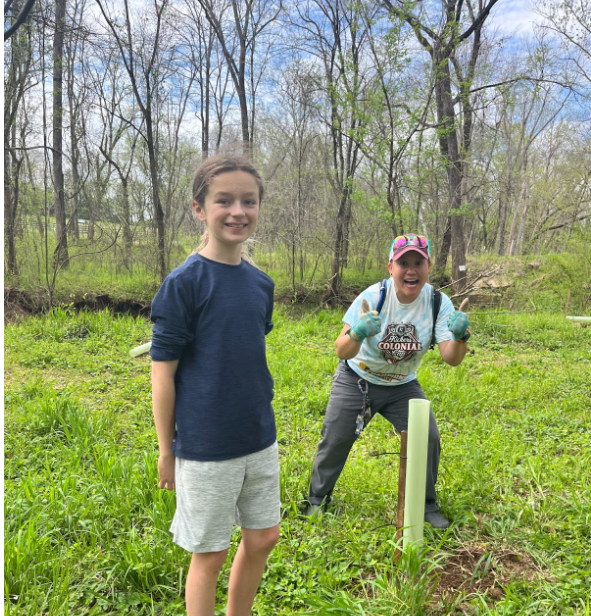
Leading James River Riparian Restoration
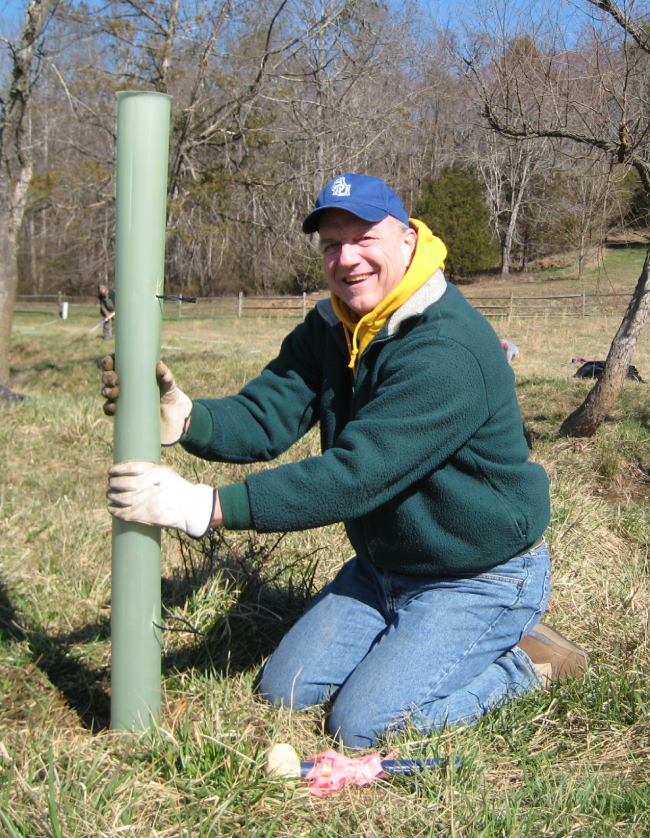
Our goal is bigger than just planting trees; we focus on restoring and caring for the entire streamside forest ecosystem. Because this careful maintenance is so important, it’s a large part of our overall stewardship program.
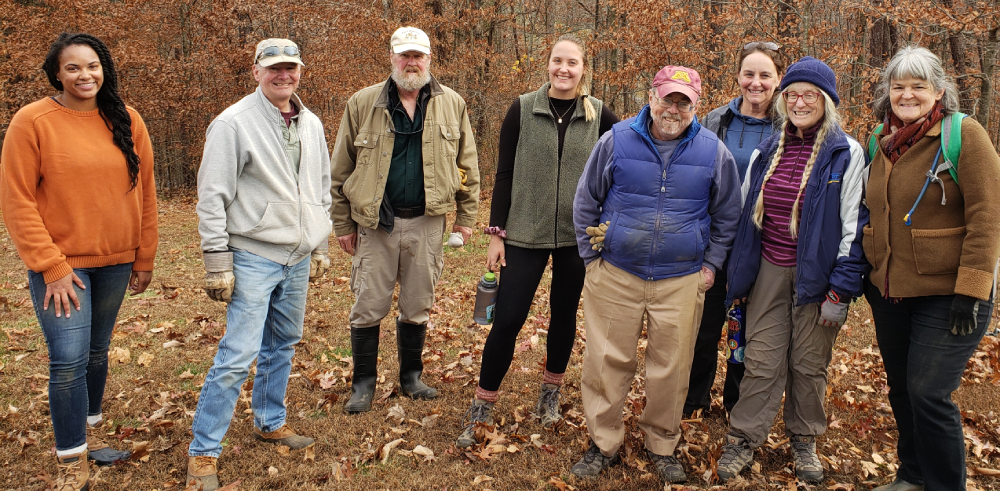
James River Stewardship Program
Our program goals include restoration and long-term care of streamside forests. One way we do this is through our James River Stewardship Program. Our efforts are directly supported by four Seasonal Stewardship Assistants who are key to the ongoing maintenance and monitoring of newly established buffers across the James River watershed.
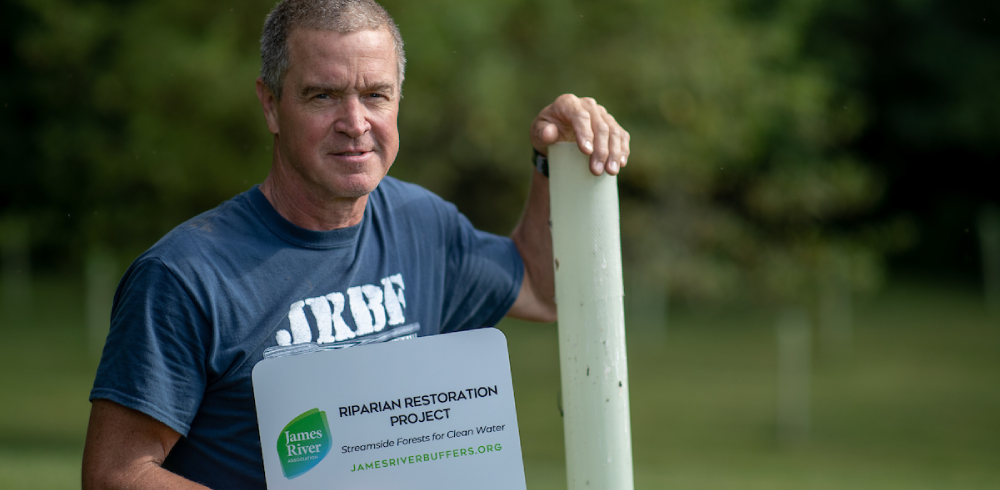
Incentivizing Landowner Participation
To facilitate broad participation in riparian forest restoration, we work with private landowners to utilize a cost-share program. This program significantly reduces the financial burden of installing and provides three years of maintenance for streamside buffers. Learn more about our Cost Share Program
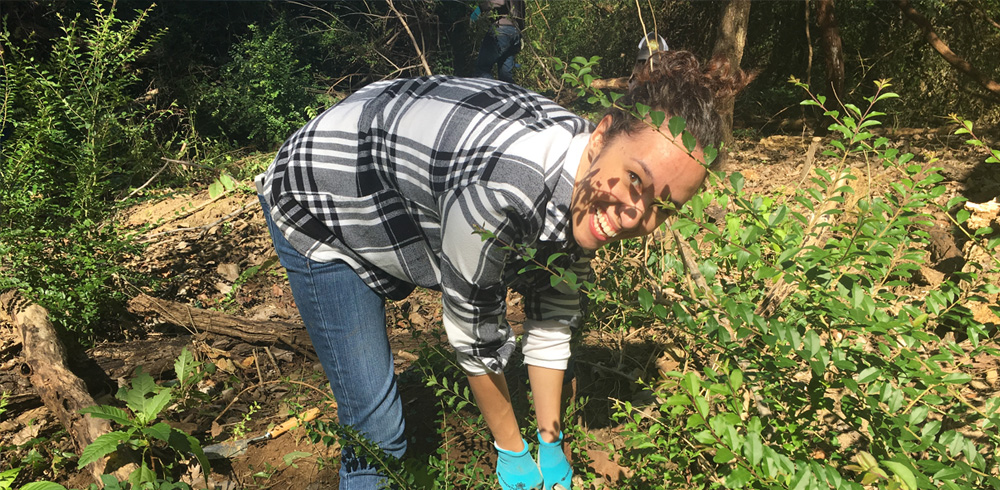
Restoring Chapel Island
We serve as a partner of the James River Park System’s Invasive Plant Task Force. Within this partnership, we focus on invasive plant species management and the restoration of native plant habitat. Learn more about the specific invasive plant species currently found on Chapel Island here
James River Consortium
We serve as the convener of the James River Consortium—a coalition of organizations, state agencies, and stakeholders committed to coordinating and scaling up streamside forest restoration across the entire watershed. Learn More About the James River Consortium
Get Involved with our Restoration Efforts
You can be a part of the movement to protect the James River. We rely on the dedication of our community to help us meet our restoration goals.
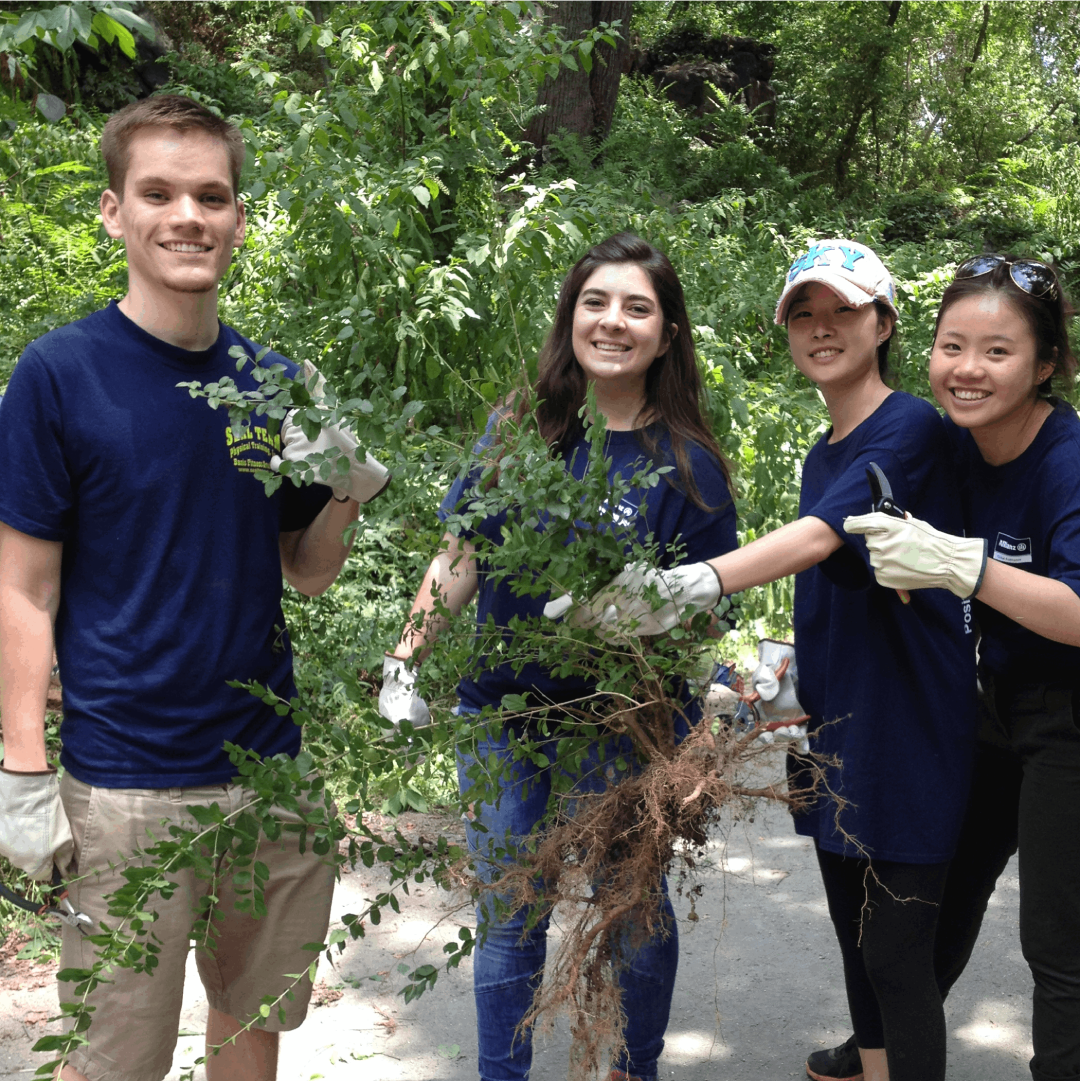
Volunteer to Remove Invasives
Get involved with critical, on-the-ground habitat restoration and stabilization efforts at Richmond’s historic Chapel Island.

Become a Riparian Steward
For a deeper commitment, our Riparian Stewards program trains volunteers to monitor and maintain newly planted forest buffers, ensuring their long-term success.
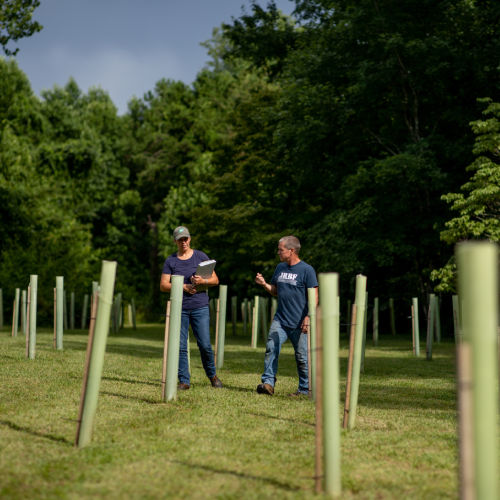
Apply for a Streamside Buffer
Landowners in the watershed may qualify for cost share programs that cover the expense of installing a forest buffer on your streamside property.