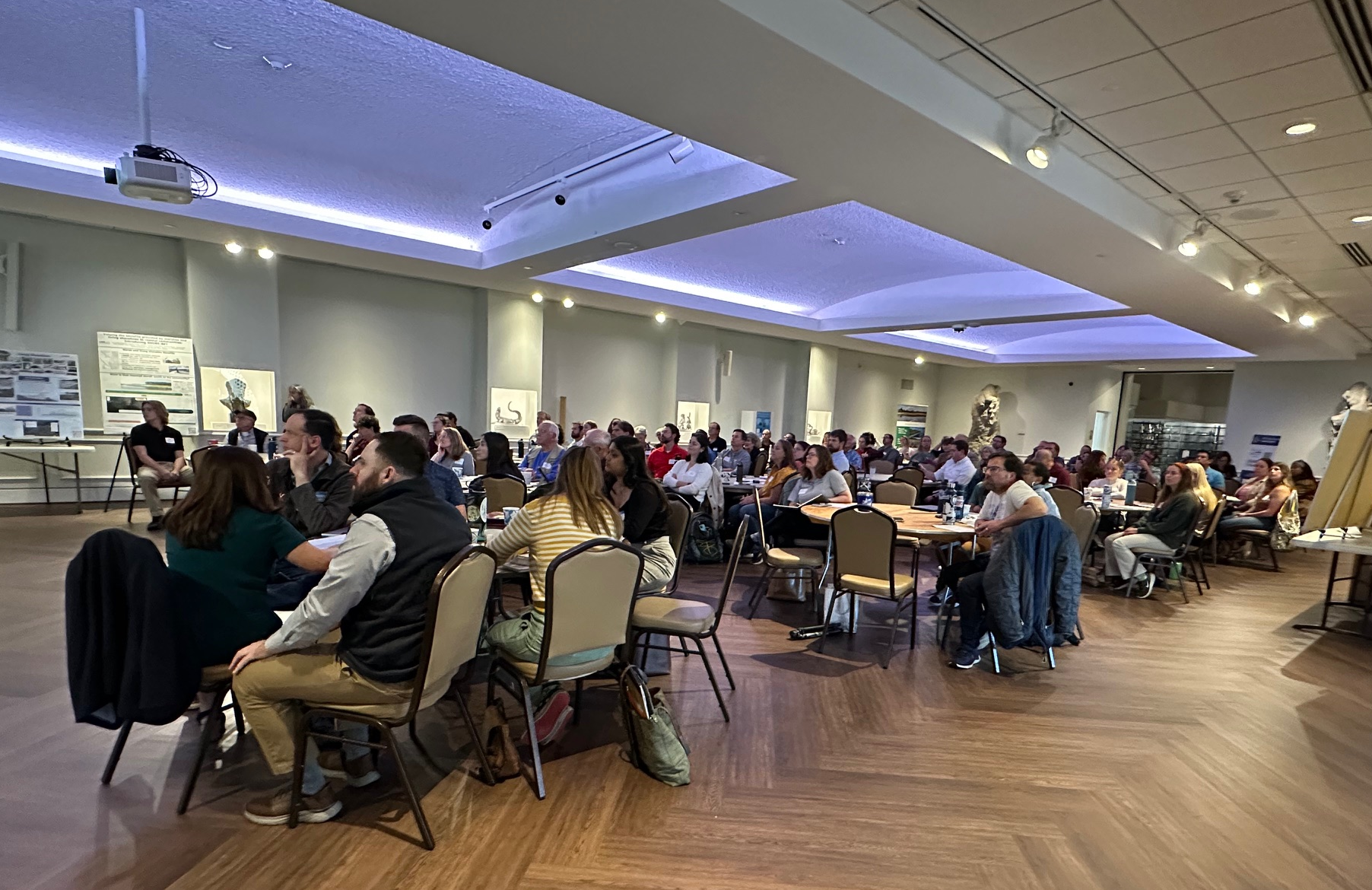
The sixth annual Living Shoreline Summit, hosted by the Living Shoreline Collaborative (LSC), was a resounding success! Held on Thursday, October 9, 2025, at The Mariners’ Museum in Newport News, VA, the event brought together 90 dedicated participants—from property owners to industry experts and government officials—united by the theme: “Together for Tomorrow: Catalyzing Coastal Resilience through Living Shorelines.”
For those passionate about the health of the James River and resilient shorelines in Coastal Virginia, this summit provided invaluable insights into expanding the impact of these nature-based solutions.

What are Living Shorelines and Why are They Key to Coastal Resilience?
Kicking off the summit, Jamie Brunkow of the James River Association welcomed attendees and introduced the LSC, emphasizing our collective mission to scale up resilient practices across the tidal James River Watershed.
Aaron Wendt from Virginia DCR provided a primer, defining living shorelines as “nature-based coastal protection strategies” that use plants, stone, sand, and organic materials. Unlike traditional hard structures like bulkheads, these solutions offer multiple benefits:
-
Erosion Control for property owners.
-
Attractive, natural appearance.
-
Crucial wildlife habitat and wetlands preservation.
-
Improved water quality in the James River and Chesapeake Bay.
Commonwealth Support
A key highlight was the address by Delegate Shelly Simonds (House of Delegates, District 70). She underscored the Commonwealth’s strong support for living shorelines and clean water initiatives, noting the growing need for businesses specializing in project maintenance. Delegate Simonds also shared a powerful personal example, detailing her own experience installing a living shoreline to create green space, enhance habitat, and improve water quality on her property
Tribal Nation Perspectives on Shoreline Restoration
The summit then featured a moving panel on the perspective of Coastal Virginia Tribal Nations:
-
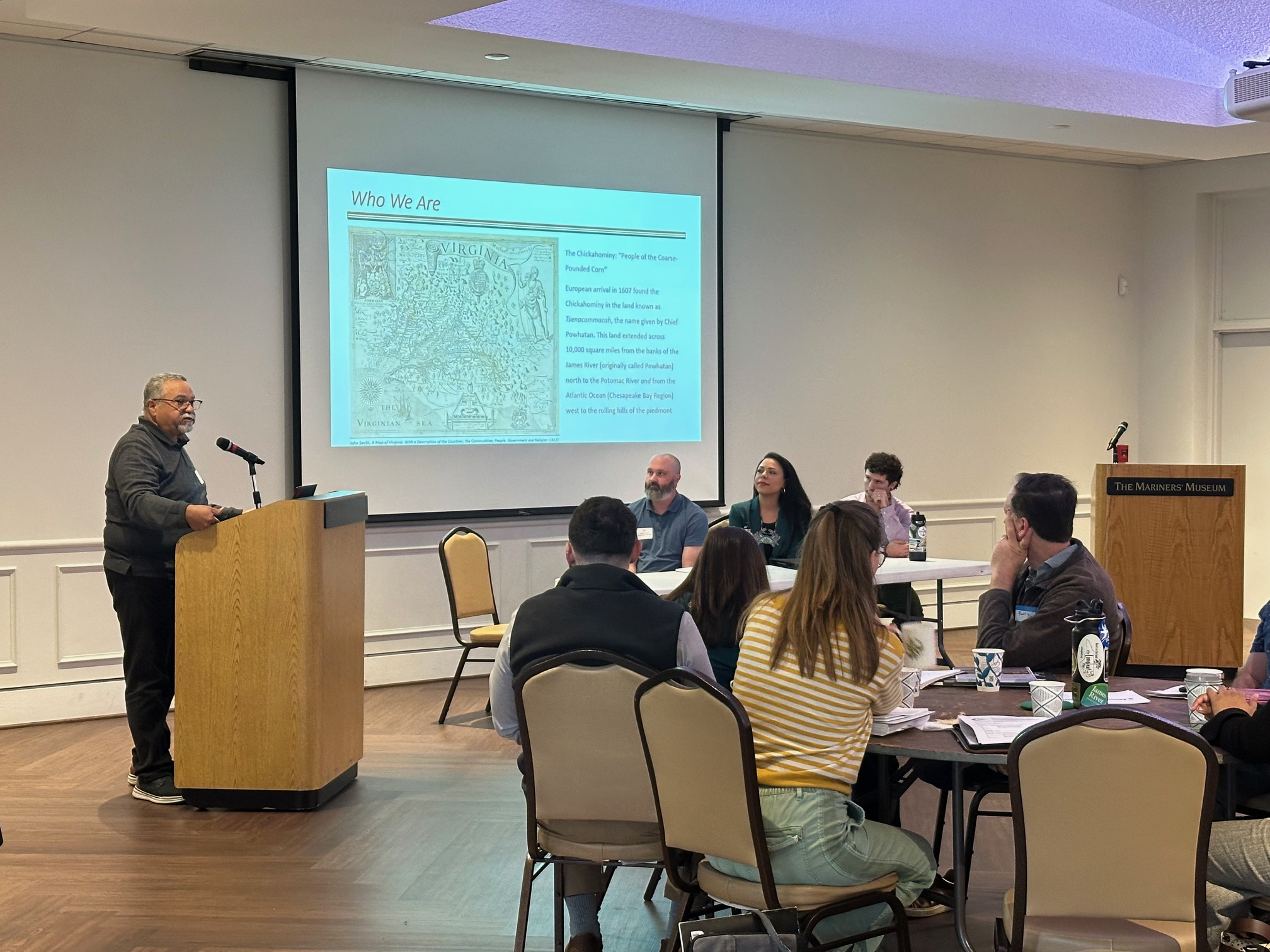
Chickahominy Tribe: Shared their history along the James River (formerly Powhatan) and discussed current plans for living shoreline design and the development of a native marsh grass nursery with William & Mary.
-
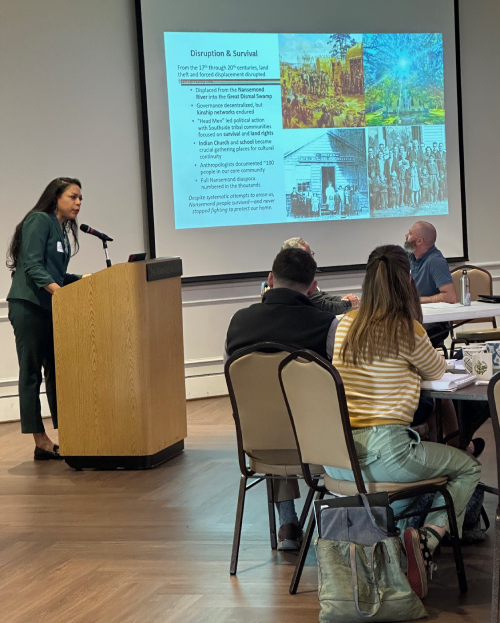
Nansemond Tribe: Discussed their work with partners on restoration projects, emphasizing the need for technical assistance and funding to continue regaining access and stewarding the Nansemond River.
-
Pamunkey Tribe: Focused on stabilizing the shoreline along their 1200-acre reservation on the Pamunkey River, detailing their success with initial living shoreline installations.
Maximizing Impact: Partnerships and Cost-Share Programs in Coastal Virginia
The power of collaboration in scaling living shoreline implementation was a core focus:
-
Elizabeth River Project and James River Association showcased how they managed and implemented the successful Speller Living Shoreline project in Portsmouth.
-
Chesapeake Bay Foundation and James River Association highlighted the Pine Cone Harbor project in Hampton, a testament to community involvement with over 200 volunteers contributing to the installation.
-
Ryan Walsh with the James River Association emphasized the success of the homeowner cost-share program in making these vital projects more accessible.
Flash talks on Catalyzing Living Shorelines sparked discussion on future challenges, with Wetlands Watch encouraging attendees to consider how strong partnerships are the key to navigating hurdles like evolving federal funding and complex permitting processes.
Key Takeaways & A Look Ahead
During small group discussions, attendees agreed on crucial next steps for Coastal Virginia’s living shoreline movement:
-
Permitting: A desire for increased regulator capacity at agencies like VMRC and USACE to help streamline permitting decisions.
-
Storytelling: The immense importance of telling the whole story—the people, the process, and the product—to inspire greater community involvement.
-
Sourcing Materials: Expanding local Virginia infrastructure for materials, especially native plants and grasses.
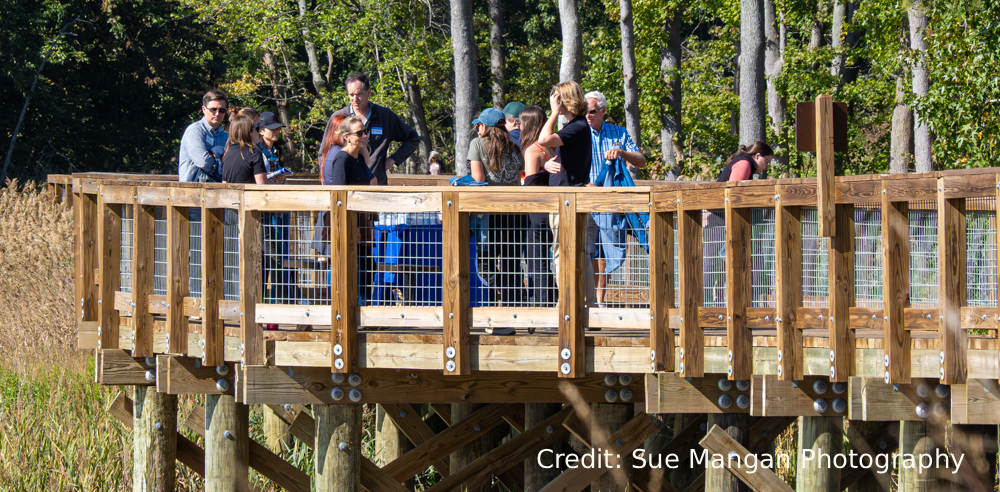
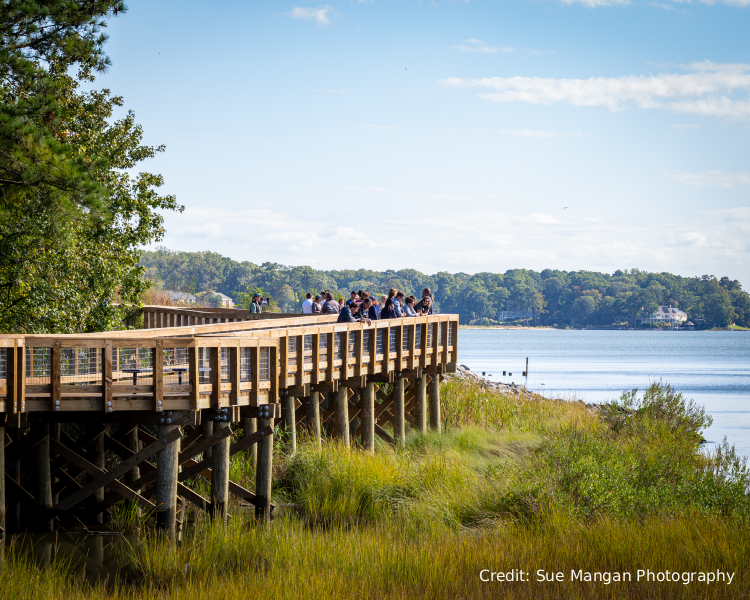
The day concluded with a special field visit to the Riverview Farm Park Shoreline in Newport News, where hosts provided insights into the development and maintenance of that specific living shoreline and walkway.
The Living Shoreline Collaborative (LSC) is a group of regional and state partners working together to scale up implementation of resilient practices along shorelines in coastal Virginia, with a focus in the tidal James River watershed. Learn more »