Every summer, Shark Week sparks curiosity about one of the ocean’s most recognizable creatures. While sharks might seem like distant ocean dwellers, their story connects directly to the James River and the Chesapeake Bay. From ancient shark teeth buried along riverbank bluffs to species that visit our brackish estuarine waters today, our watershed has a deep connection to these apex predators.
Connecting with local nature—whether finding a fossilized tooth along the shore or learning about marine life at a local museum—builds understanding and stewardship. Here are a few practical ways you and your family can celebrate Shark Week while discovering the natural history of the James.
 Learn About Local Sharks and Ancient Fossils
Millions of years ago, warm prehistoric seas covered much of eastern Virginia. Today, evidence of that ancient marine life can still be found along riverbanks and tidal shorelines throughout the watershed.
- Virginia Institute of Marine Science (VIMS) Shark Research: VIMS runs one of the longest-running shark monitoring programs in the world. Check out their Shark FAQs to learn about sandbar sharks, smooth dogfish, and other species that visit the lower tidal James and Chesapeake Bay each summer.
- Chesapeake Bay Program Field Guide: Want to know what sharks eat or where they travel? The Chesapeake Bay Program Field Guide offers family-friendly overviews of local estuarine wildlife, including the sandbar shark—the most common large shark species in our bay and coastal rivers.
- Virginia State Parks Fossil Guides: Parks like Chippokes State Park sit along the tidal James, where visitors can spot fossils from prehistoric creatures like the Megalodon. Explore Virginia DCR’s State Park Events to find guided ranger walks and fossil identification programs along the shoreline.
Hunt for Fossils Responsibly
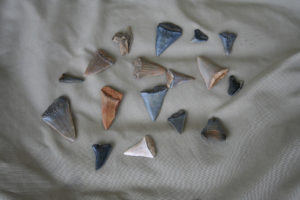 Searching for fossilized shark teeth is a great way to experience local geology firsthand. Public parks along our tidal waters offer accessible spots to explore, provided we treat these natural spaces with care.
- Virginia State Parks: Parks like Chippokes State Park and York River State Park offer designated beach areas where visitors can walk the shoreline and search for surface fossils.
- Mindful Shoreline Access: Keep safety and river health in mind. Stick to established public access points, avoid digging into or climbing fragile banks and cliffs, and practice leave-no-trace principles so these places remain healthy and open for everyone.
 Hands-On Science and Learning
Learning about aquatic life doesn’t require a trip to the beach. Hands-on activities at home, in summer camps, or in community spaces help young explorers understand key science concepts.
- Fossil Identification Guides: Download a local shark tooth identification chart to compare shapes, sizes, and serrations from common species found in Virginia.
- The “Why Don’t Sharks Sink?” Experiment: Try a quick hands-on experiment using water and vegetable oil to demonstrate how a shark’s oily liver provides buoyancy without a swim bladder.
- Recycled Marine Art: Turn empty tissue boxes, paper towel tubes, and cardboard into shark models. Step-by-step guides like Saving the Seas’ Eco-Shark Craft make it easy to talk about plastic reduction while crafting.
- Build a Recycled Watershed: Stack clean food tubs, boxes, and a plastic liner inside a bin to create a 3D landscape. Try this Hands-On Watershed Model Activity to demonstrate how rain falling inland travels down local streams to the James River and out to the ocean.
 Healthy Rivers Support Healthy Oceans
Sharks rely on balanced marine ecosystems, and those ecosystems depend on clean water flowing from inland rivers like the James. What happens in our local streams, neighborhood parks, and rain gutters directly influences water quality downstream in the Bay and Atlantic Ocean.
When we plant buffer trees, manage stormwater at home, or participate in local river cleanups, we protect habitats for fish, crabs, and marine life across Virginia. Small, committed actions in our own communities create a lasting positive impact for the entire watershed.