
While the 2025 James River Watch (JRW) season provided important safety communications to river lovers across the state, it also serves as a vital check-up for one of Virginia’s most cherished natural resources. A record number of volunteer citizen scientists joined the program, and the data delivered a sharp reminder about the effects of weather on river health. We saw the 2025 overall rate for the James River being safe for swimming, paddling, and recreation dropped significantly due to unusually high precipitation.
At its core, James River Watch is about empowering people to engage safely with the James River and its tributaries. For you—the paddlers, anglers, and swimmers on the James—that means having the information to “Know Before You Go.”
Why James River Water Quality Results Decreased This Summer
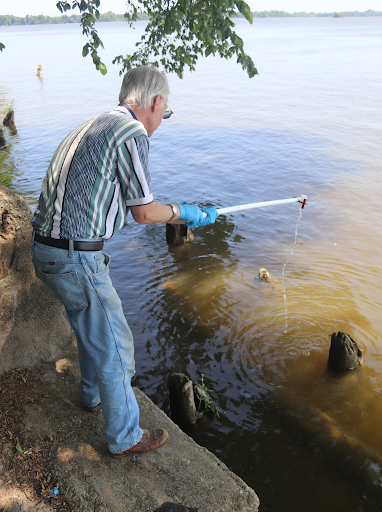
Over the course of the summer, our dedicated network of 107 volunteers collected 477 water samples across 36 monitoring locations, spanning the entire watershed from the Allegheny Highlands to the Chesapeake Bay.
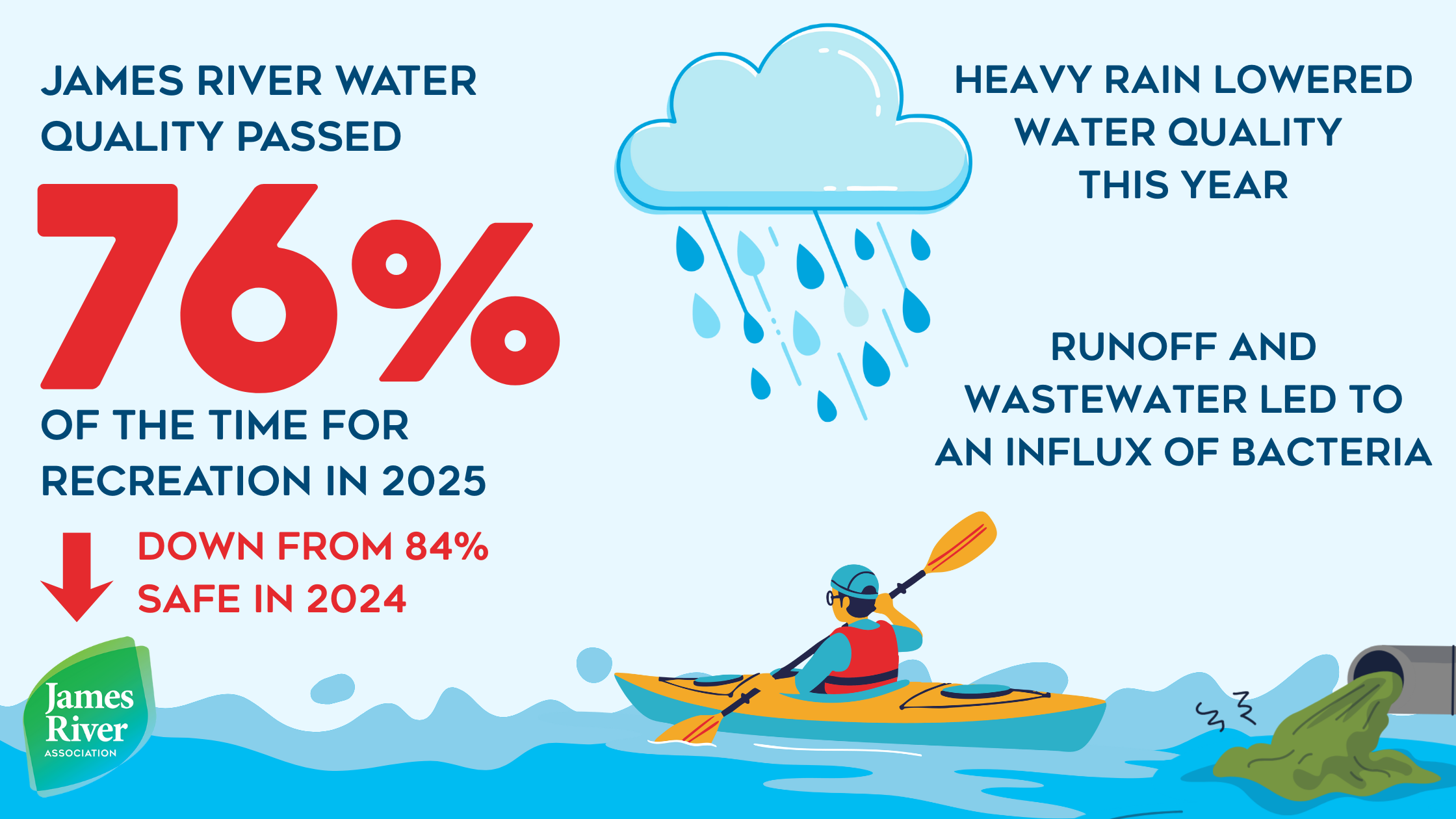
The most crucial takeaway for river users: From Memorial Day through Labor Day, data showed the James River was safe for swimming & recreating 76% of the time (down from 85% in 2024).
This is a noticeable decline from the previous year’s 85% passing rate and falls below the 10-year average passing rate of 84% (2015-2024).
The primary reason? Unusually high levels of precipitation—particularly during a stormy July—caused elevated bacteria levels in the water.
Local Results for Virginia’s James River Access Points
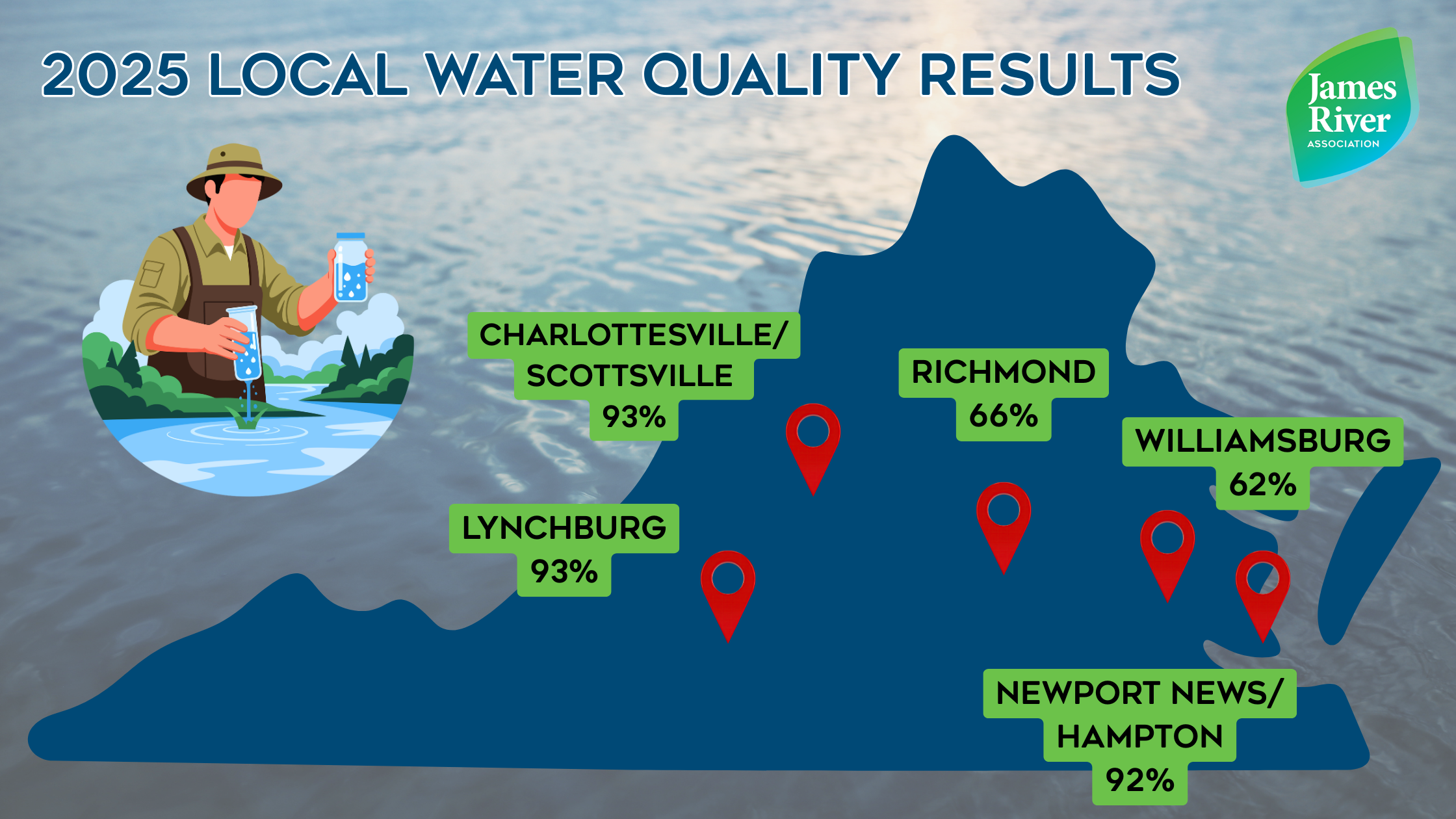
While the watershed-wide passing rate was 76%, conditions varied greatly based on location and local pollution pressures, providing important context for specific areas across Virginia:
| Region | Monitoring Sites | Overall Passing Rate | Key Takeaways for Water Safety |
| Lynchburg | Riveredge Park | 93% | Our Riveredge Park site maintained excellent safety standards for swimming and recreation. |
| Newport News & Hampton | Four Sites | 92% | Sites near the mouth of the river, monitored by Peninsula Master Naturalists, had consistently safe levels. |
| Charlottesville & Scottsville | Six Sites | 80% | The upper James River region showed good overall results for recreational use. |
| Richmond | Eight Sites | 66% | The combined rate for the metro area was low, significantly impacted by Chapel Island, which had safe levels just 29% of the time. |
| Williamsburg | Five Sites | 62% | This low rate is heavily due to persistent issues at Powhatan Creek and College Landing. Excluding those two sites, the rest of the Williamsburg area had a combined passing rate of 95%. |
How Water Quality Impacts Our Safety and Wildlife Habitats
For both the safety of recreationalists and the health of the habitat, addressing pollution from runoff and wastewater is paramount.
- For Your Safety: Runoff is the “vehicle” that carries fecal bacteria, nutrients, and chemicals from paved surfaces, farms, and lawns directly into the river, making the water unsafe for swimming, as evidenced by our 76% passing rate this year. High levels of fecal bacteria indicate increased health risks for recreational users, including stomach illness from accidentally swallowing water, upper respiratory illness, or skin infections.
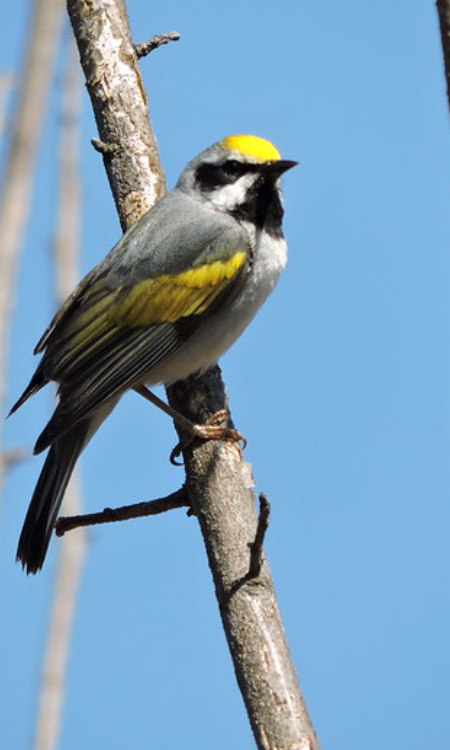
- For River Health & Wildlife: The same pollution events stress key indicator species across the entire watershed:
-
-
- For Juvenile Striped Bass (whose population numbers declined this year), polluted runoff carries excess nutrients into their tidal nursery habitat. These nutrients fuel algae blooms (like a thick layer of green scum) that strip the water of dissolved oxygen (the air that fish breathe), creating stressful conditions for these vulnerable young fish.
-
Connecting Water Quality to the State of the James Report Score
The State of the James Report is a comprehensive, biennial assessment that measures progress toward a healthy James River by assigning percentage scores and letter grades to key indicators like pollution control and fish health.
| Pollution Control Category | Score | Grade | Challenge Highlighted by JRW |
| Wastewater Pollution Controls | 94% | A | Strong progress in treating sewage during dry weather. |
| Bacteria Reductions | 66% | B- | Direct measure of progress in reducing bacteria for safe recreation and aquatic health. |
| Stormwater Pollution Controls | 71% | B | Inadequate controls cause spikes in bacteria and pollutants after rainfall. |
| Agricultural Pollution Controls | 64% | B- | Progress needed to reduce runoff from farm fields across the watershed. |
| Sediment Reduction | 58% | C+ | Sediment remains a major issue for fish habitat across the watershed. |
While our score of A (94%) for Wastewater Pollution Controls reflects significant, multi-million-dollar upgrades to sewage treatment plants, the low score in Bacteria Reductions (B-) is heavily influenced by challenges across the watershed. Spikes in bacteria after heavy rain are still present due to Combined Sewer Overflow (CSO) events in older infrastructure like that in Richmond (releasing untreated wastewater), compounded by non-point source pollution due to inadequate Stormwater Pollution Controls (B) and Agricultural Pollution Controls (B-). This combination must be addressed.
We must accelerate investment in green infrastructure (like rain gardens and permeable pavement) and agricultural best management practices to manage runoff and ensure a safer, healthier river.
Know Before You Go: Check the Map!
We encourage anyone fishing, swimming, paddling, or relaxing on the James River to make it a habit to check our James River Watch Map before you head out.
While weekly volunteer testing has concluded for the season, remember to check local advisories (like Richmond and Lynchburg CSO alerts) as well as the flow information we continue to share on our map from USGS gauges and NOAA data. Rapid currents and high-water levels following heavy rain can create dangerous conditions, even if bacteria levels are safe.
Thank you to the 107 Volunteers and our partners for their tireless work this season! The James River Association looks forward to returning next Memorial Day weekend for another season of keeping you connected and informed.
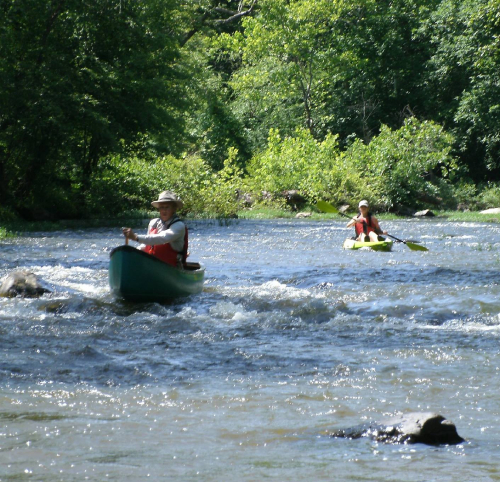
How You Can Help Water Quality!
Your action matters! By engaging with JRA programs, you can directly contribute to improving the pollution controls and grades highlighted in the State of the James Report:
- Become a River Hero Home: Learn simple, effective steps you can take at home to capture stormwater runoff, reduce pollution, and stop it before it reaches the James. Pledge Now!
- Support Restoration Efforts: If you own land which contains a spring or stream in the James River Watershed, consider planting stream side trees and shrubs which are the best natural defense against sediment and nutrient runoff from agricultural lands. If you don’t own a property that qualifies, volunteer!
- Be an Advocate: Use your voice to support policies that fund infrastructure upgrades and better stormwater pollution controls across Virginia. Join our Action Network and speak for the James!
- Volunteer: Join a cleanup, plant a tree, or become a part of the next James River Watch team! Indicate your interest in volunteering next year!
Explore the latest State of the James Report to learn more about the grades for pollution controls and other key river indicators.