Camping on the James
Embark on an Adventure: Camping Trips Along the James River
The James River is more than just Virginia’s largest river; it’s a lifeline that winds through the heart of the state, offering diverse landscapes, rich history, and endless opportunities for outdoor adventure. Whether you’re a seasoned camper or a first-timer, a multi-day expedition along the James River promises unforgettable experiences, from the rugged beauty of the Blue Ridge Mountains to the serene coastal plains near the Chesapeake Bay.
In this guide, we’ll explore the river’s three distinct sections and dive into the best camping options, planning trips, and unique experiences the James has to offer.
Camping Options: From Backcountry to Glamping
Whether you’re roughing it or seeking luxury, the James River offers camping options for every style and comfort level

Tent Camping
Tent camping is the classic way to experience the James River’s Natural beauty up close. It’s perfect for those who want to sleep under the stars and wake up to the sounds of the river.
What to expect:
- Primitive sites with no cell service or facilities.
- Having minimal gear like dry bags, sleeping pads, and lightweight tents.

Hammock Camping
Hammock camping is a lightweight, space-saving alternative to tent camping. It’s ideal for adventurers who want to carry less gear.
What you need:
- A sturdy hammock.
- A bug net and rain fly for protection.
- Proper suspension straps to avoid damaging trees.

RV, Camper, and Trailer Camping
RV camping is all about bringing home comforts on the road.
Types of RV Camping:
- Class A – Bus-Type RV
- Class B – Ford Transit Vans
- Class C – Smaller Cab with sleepers
- Trailers – Travel trailers, 5th wheel trailers, toy hauls, pop ups, and truck bed trailers

Cabins, Lodges, and Yurts
Cabins and yurts offer a cozy retreat after a day on the river. They’re great for those who want a roof over their heads and still connected to nature.
What to expect:
- Cabins & lodges with amenities, such as bathrooms, showers and beds.
- Yurts – originally used by nomadic peoples – now feature AC, beds, & sometimes electricity.

Glamping
Glamping is camping with a touch of luxury, It’s ideal for those who want to enjoy the outdoors without sacrificing comfort.
What to expect:
- Comfortable beds and linens.
- Gourmet meal options and fire pits.
- Stunning river views for the ultimate relaxation.
Journey Through the James River Basin
Stretching 340 miles and draining a 10,000-square-mile basin, the James River flows from its headwaters in the Alleghany Highlands, through the Blue Ridge Mountains, across the rolling Piedmont, and into the coastal plain before emptying into the Chesapeake Bay. The river is divided into 3 sections: Upper, Middle, and Lower James, each offering distinct landscapes, wildlife, and recreational opportunities.
Upper James
The Upper James starts at the confluence of the Jackson and Cowpasture Rivers near Iron Gate, where two mountain streams unite to form 64 miles of one of Virginia’s most scenic waterways.
Must See Highlights:
- 59 miles of the Upper James are protected under the Virginia Scenic Rivers Program, ensuring its breathtaking landscapes remain unspoiled. A portion of the watershed is also designated as a Virginia State Scenic River, further preserving its natural beauty.
- The Upper James Water Trail is a multi-day paddling route that is popular with canoeists and kayakers. Outfitters like Twin River Outfitters and Wilderness Canoe Co. provide gear rentals, shuttle services, and guided trips, making it easy to plan your adventure.
Best Camping Spots:
- Craig Creek Recreation Area: Provides tent and RV sites with water and electric hookups, a boat ramp, river access, vault toilets, and hiking trails.
- Gala Campgrounds: Features tent and RV sites with water and electric hookups, a camp store, and boat ramp
- Arcadia Campground: Offers tent and RV sites with water and electric hookups, a camp store, and boat ramp.
- Middle Creek Campground: Provides tent and RV sites with electrical and water hookups, a camp store, boat ramp, fishing pond, playground, and access to hiking trails.
- Jellystone Campground: Offers RV and tent sites with full hookups, cabins, a camp store, water park, mini-golf, playground, and planned activities.
- Wilderness Canoe Campground: Features tent camping sites along the river, access to canoe/kayak rentals, and basic amenities like picnic tables and fire rings.
- Balcony Falls: Offers tent and RV camping sites, cabins, picnic tables, fire rings, vault toilets, and access to hiking trails.
- Glen Maury Park: Provides RV and tent camping sites, a camp store, picnic areas, hiking trails, a playground, and access to a lake and observatory.
Middle James
The Middle James begins in Lynchburg and flows 110 miles to the Falls of the James in Richmond, passing through rolling hills, historic towns, and some of Virginia’s most beloved state parks.
Must See Highlights:
- James River Batteau Festival (June): A week-long celebration of Virginia’s river heritage, featuring traditional batteau boats, live music, and local food. The festival launches from Lynchburg and travels downstream to Richmond.
- James River State Park (Gladstone, VA): Offers tent camping, cabins, and yurts, plus hiking, biking, and river access.
- Powhatan State Park (Powhatan, VA): Features wooded campsites, trails, and stunning river views.
- Twin Lakes State Park (Green Bay, VA): Offers a 33-site campground, and cabins, plus hiking, boating, fishing, and picnicking access.
- Hatton Ferry: One of the last hand-cranked ferries in the US, this historic ferry near Scottsville offers a unique way to cross the river.
- Seven Islands: A group of seven islands near Lynchburg that provide secluded camping spots for paddlers.
Best Camping Spots:
- James River State Park: Canoe Landing: Provides tent and RV sites with electric hookups, rustic cabins, restrooms with showers, a dump station, hiking and river access.
- James River Runners: Features tent-only sites with river access, picnic tables, fire rings, and nearby restroom facilities.
- James River Reeling & Rafting: Offers campsites for tents and RVs, riverfront cabins, and glamping tents with access to rafting, a camp store, and riverside activities.
- Powhatan State Park: Riverbend Campground: Features tent and RV sites with electric and water hookups, a camp store, boat ramp, fishing opportunities, and river access.
- Lake Chesdin Campground: Provides RV and tent sites with water and electric hookups, a boat ramp, fishing dock, camp store, playground, and access to hiking trails.
- Sharp’s Island: Offers a waterfront cabin with a private dock, fire pit, grill, and direct river access for camping and outdoor activities.
Lower James
The Lower James begins at the Falls of the James in Richmond and flows 160 miles to the Chesapeake Bay, transitioning from a freshwater river to a tidal estuary. This section is where the river widens, slows, and changes dramatically with the tides, creating a unique ecosystem of marshes, tidal flats, and diverse wildlife.
Must See Highlights:
- Colonial National Historical Park (Yorktown, VA): Explore historic sites like Yorktown Battlefield and Jamestown.
- Chippokes Plantation State Park (Surry, VA): Features ancient cypress trees, hiking trails, and river access.
- Fort Monroe National Monument (Hampton, VA): A historic military site with beaches and waterfront views.
- Chickahominy Riverfront Park: Famous for its bald cypress trees and marsh environment, this park is a haven for birders and photographers.
Best Camping Spots:
- Lawrence Lewis Jr. Park Primitive Camping Area: Includes picnic shelters, restrooms, and access to Virginia Capital Trail for cyclists and walkers.
- Ed Allen’s Campground: Offers tent and RV sites with water and electric hookups, a camp store, boat ramp, fishing pier, playground, and river access.
- Rockahock Campground: Provides tent and RV sites with water and electric hookups, primitive camping, a camp store, boat ramp, fishing pier, playground, and access to the James River.
- Riverside Camp & Marina: Offers tent sites, RV pads with full hookups, free WiFi, a boat ramp, marina rentals, an in-ground pool, a full-service store, and laundry facilities.
- Chickahominy Riverfront Park: Features 14 electric-only, 25 electric-and-water, and 33 full-hookup sites for tents and RVs, along with restrooms, showers, a dump station, playground, boat ramp, and a camp store.
- Chippokes Plantation State Park: Includes 50 campsites with electric and water hookups that accommodate tents, pop-ups, and RVs, as well as 4 overnight cabins, picnic tables, fire rings, restrooms with showers, and a playground.
- The Colonies RV and Travel Park: Offers full hook-up RV sites with concrete pads, fire pits, picnic tables, clean single-person restrooms, free WiFi, a dumping station, and access to a clubhouse.
Planning Your Expedition: Tips and Tools
Planning a camping trip requires preparation, but the right tools and knowledge can make it seamless. Here’s how to get started:
1. Do Your Research
- Consult local outfitters like James River Watch for insights on water temperature, levels, and current conditions
- Check maps (paper, laminated, and/or cellular) to plan your route and identify rapids or campsites
2. Secure Maps and Permits
- While no permit is required to camp on the James, its highly recommended to have landowner permission. Permits are required to visit Wildlife Management Areas.
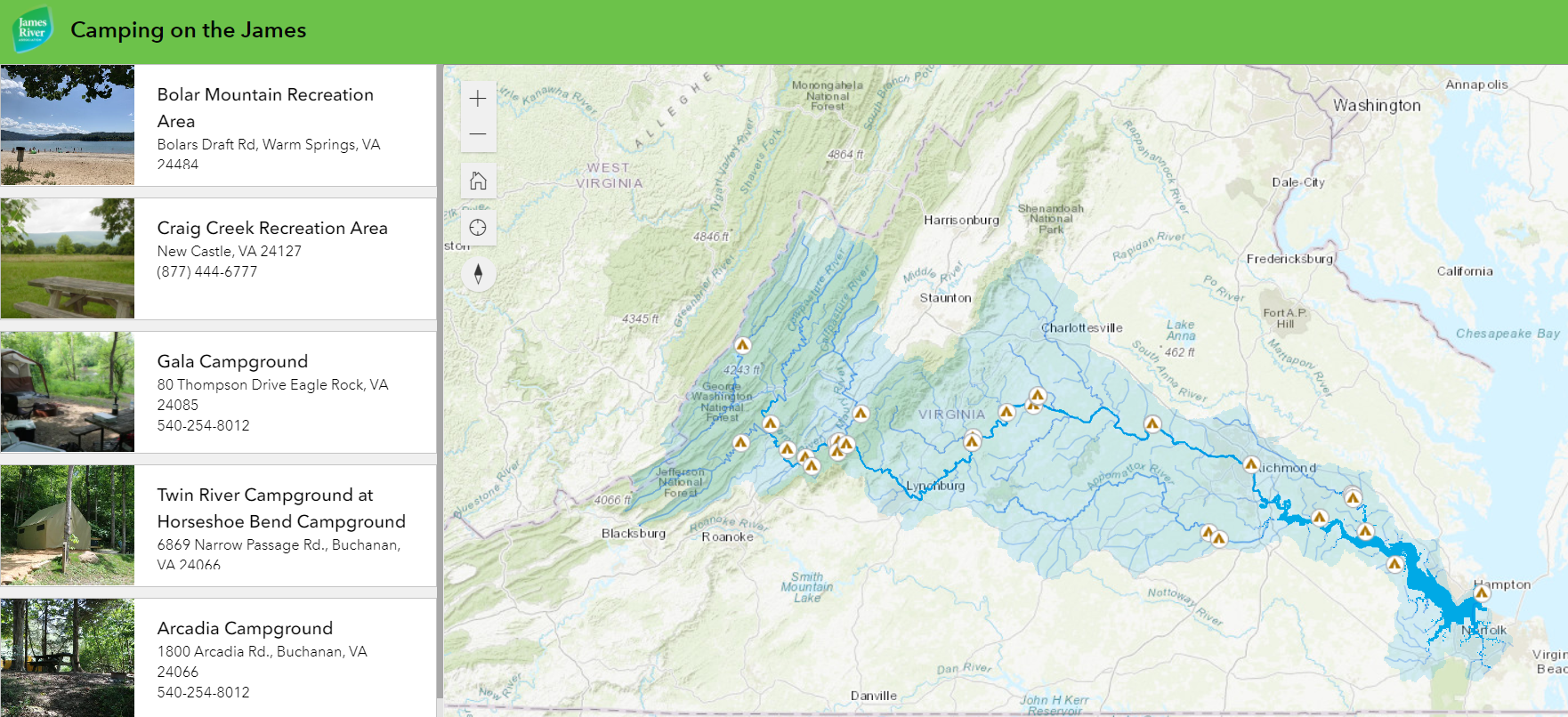
- Use the Camping on the James Map to find campsites and plan your journey
3. Establish Trip Roles
- Trip Lead: Oversees safety, assesses risks, knows emergency protocols
- Gear Person: Ensures everyone has essential gear like tents, sleeping bags, etc…
- Cook: Plans and prepares meals for the group
- Medic: Handles first aid and medical emergencies
- Fun People: Keep the group’s spirits high with games and activities
4. Create a Gear Checklist
Refer to resources like REI for a comprehensive packing list
- Navigation: Maps, Compass, and GPS
- Shelter: Tent, hammock, or yurt reservation confirmation
- Cooking: portable stove, fuel, and cookware
- Safety: Personal Flotation Device, first aid kid, and emergency whistle
- Clothing: Quick-dry layers, rain gear, and sturdy footwear
5. Use Online Tools for Planning
- James River Explorer: Explore activities and measure distances between locations
- Camping on the James: Find campsites, view maps in 2D, 3D or realistic mode, and get coordinates for remote spots
- James River Watch: Check the water quality of the James River every Friday from Memorial Day to Labor Day for ideal recreational conditions.
Overnight Float Trips on the James River
From the Alleghany Highlands to the Chesapeake Bay, the James River basin is home to a variety of outdoor recreation activities. Camping along the James and its tributaries is a popular activity during the warmer months of the year.
The James is a great place to float, fish, and camp. Nothing beats falling asleep to the soothing sounds of the river after a long day of paddling. In the morning, enjoy your coffee along the banks before jumping back in your boat and letting the river carry you away.