

It’s that time of year! When pollen is in the air, warm breezes move in, and familiar faces we haven’t seen in a while return. I’m talking, of course, about migrating birds!
Many species of neotropical migrants that have spent the winter in Central and South America are pushing north across the entire James River Watershed, from the mountains to the coast. While many of these birds will stay with us throughout the spring and summer, many more are only using our streams, mountain coves, savannas, and wetlands as a jumping off point for their ultimate destination, the enormous Boreal Forest of Canada. Flocks of these birds can be observed on radar, allowing researchers to create accurate estimates of bird migration. Cornell University runs birdcast.info, allowing the public to see which days will provide the best chances of seeing migrants in their neighborhoods.
Some of the birds coming through now:
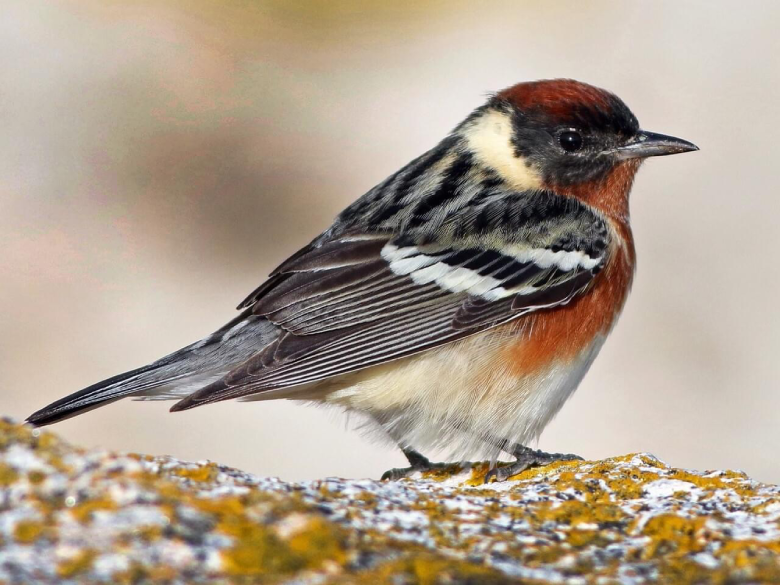
Bay-breasted warblers are strikingly beautiful, while being (well for a warbler, at least) quite large. These birds won’t stay with us in Virginia, but are on their way to the Northern US and Canada where they will have their chicks and feast on spruce budworms. The males have a striking black mask with a red throat and sides. They love to feed on our native fruit trees, like red mulberry or serviceberry, and can be found close to the James River during migration.
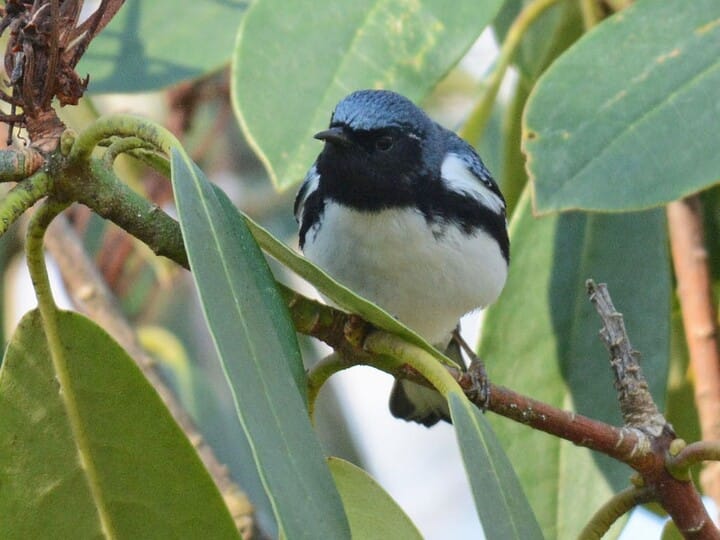
Black-throated blue warblers are another strikingly beautiful songbird that can be seen throughout Virginia during spring migration, but will stay with us in our mountains during the warmer months. Like most warblers, the males are more colorful than the females with a black throat with a blue head and body with white markings. They can be heard in mature hardwood trees, giving a buzzy call while feeding on caterpillars.

Prothonotary warblers are true swamp specialists and offer bright flashes of yellow (nickname for them is swamp canary) around bald cypresses and tupelos, where they thrive. Males arrive in our region before the females and establish their breeding territories by singing and bickering with one another. After pairing up, both males and females will build a nest in the cavity of a dead tree that’s surrounded by water. Unlike many migrating songbirds that are feeding very high in the canopy, prothonotary warblers can be found much lower and enjoyed by those walking on a wetland boardwalk or paddling up your favorite swamp.
Where to go to see these birds in our watershed? Well, nearly anywhere! As long as you’re up early! Remember, these birds have been flying all night and are at their most active around sunrise while refueling for their next push northward. The James River Park system in Richmond has identified great locations to see birds for spring migration and any time of year. In Tidewater, places like Newport News Park and Sandy Bottom Nature Park likewise offer urban oases to see these birds as they refuel after an intense night of flying. For more adventurous birding in our mountains, visit Warbler Road where many species normally seen high up in trees are at eye level.
No matter where you end up, be sure to enjoy this annual, great display of nature in the James River Watershed!