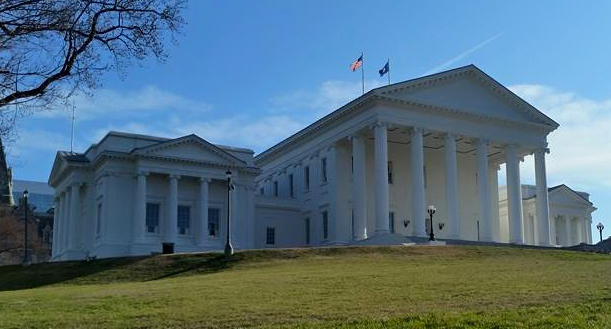
As we reach the midway point in 2025, we’re taking stock of the wins we’ve secured for the James River so far this year. Our Advocacy Network joined us in pushing for a range of priorities to support the health of the James during the 2025 legislative session session.
Here’s a look at what made it through in 2025 and what we’ll keep pushing for in 2026.
2025 Legislative Wins
We were glad to see many of the priorities we advocated for made their way across the Governor’s desk for a signature. This includes legislation that:
- Establishes a Wetlands Task Force focused on protecting, restoring, and creating tidal and nontidal wetlands in Virginia (HB2034)
- Requires Hazardous Substance Response Plans (HB2516) at industrial facilities detailing requirements for reporting and addressing discharges to protect waterways.
- Allows local governments to establish Tree Canopy Funds, making it easier to replace trees lost during development and giving builders more flexibility to meet tree canopy requirements. (HB2630). Richmond is already in the process of drafting an ordinance to establish a fund!
In addition, the legislature ensured critical funding for projects that will support the health of the James River and the wildlife that call it home.
Richmond Combined Sewer Overflow (CSO)
The legislature awarded an additional $50M for Richmond’s Combined Sewer System, getting us $100M closer to the total amount of funds needed to implement the final plan and meet the state-mandated deadline of 2035. Projects included in the final plan will reduce the frequency and volume of combined sewer overflow events that pollute the James River.
A Study for Surface Water Intakes
As part of our work to protect migratory fish species, including the recovery of the American Shad in the James, we advocated for funding for VIMS to study the impact of water intakes on aquatic species. The $880k allocated for this study will allow us to better understand the threats these species face and support their recovery.
Since 2021, American Shad have earned a 0% on our State of the James report.
Blue Catfish Infrastructure Fund
Another win for migratory fish species was the $250,000 made available for a Blue Catfish Infrastructure Fund. This grant program is intended to help commercial fisheries process this highly invasive species that feed on many important native species in the James River, including migratory fish and their young.
Seabird Nesting Colony Relocation
More than $4 million was allocated to relocate a Seabird Nesting Colony on the James River that had been disrupted by the construction of the Hampton Roads Bridge Tunnel.
Wildlife Corridor Crossing Fund
The budget allocates $450,000 to the Department of Wildlife Resources to fund high-priority projects identified in the Wildlife Corridor Action Plan. Wildlife crossing projects help land and water-based animals move safely between habitats, while also reducing wildlife-vehicle collisions.
2025 Legislative Losses
Despite these wins for the James, there were several other policy priorities that failed this session.
$40M for Stormwater Local Assistance Funding
The Governor vetoed $40M in Stormwater Local Assistance Funding. Stormwater is the third largest pollutant in the James River and the only pollutant whose presence is growing in both the James and the Chesapeake Bay. Removing these dollars jeopardizes the ability of localities to manage stormwater and reduce its impact on the river.
$500k for Meaningful Watershed Educational Experiences
JRA had more than 24,000 interactions with K-12 students through our educational programming in FY24. Many of the trips we offer are made possible through state funding for Meaningful Watershed Educational Experiences (MWEE). Along with our partners, we advocated for an additional $500k to expand this program and reach schools outside the Chesapeake Bay watershed. While lawmakers did add this item to the budget, it was vetoed by the Governor.
$20M for State Parks Deferred Maintenance
JRA advocated for essential funding for maintenance of parks in the James River watershed like Chippokes Plantation State Park, James River State Park, Powhatan State Park, and others across the commonwealth.
HB2638 – Tree Conservation and Replacement
Legislation that would have given local governments authority to conserve or replace trees during land development by enabling establishment of density per acre targets and monitoring tree canopy condition and coverage was vetoed by the Governor.
HB2059 – Virginia’s Great Outdoors Act
As a member of the Our Virginia Outdoors coalition, JRA supported legislation to establish a dedicated source of funding for conservation and recreation projects in Virginia. Despite broad support for HB2059, it failed to clear the House Appropriations Committee.
Legislative Opportunities for 2026
As we reflect on the progress of the 2025 legislative session, JRA is also preparing for the important work ahead in 2026. With potential federal funding cuts on the horizon, state investments in clean water, habitat restoration, and resilient infrastructure will be more important than ever.
JRA will continue to advocate for policies and funding to protect the James River, including:
- Securing funding for the Stormwater Local Assistance Fund (SLAF) and the Virginia Conservation Assistance Program (VCAP), to help localities implement stormwater management projects that reduce stormwater pollution
- Funding for the Virginia Agricultural Cost-Share Program to help farmers protect their local waterways through conservation practices
- Funding for wastewater treatment plant upgrades to enhance treatment standards and reduce nutrient pollution
- Ensuring the Virginia Department of Forestry’s Virginia Trees for Clean Water grant program is sufficiently funded
- Funding to expand access to environmental education programs for schools across Virginia
- Meeting and sustaining funding needed to fully address Richmond’s combined sewer system by the mandated deadline in 2035
- Funding for high-priority projects that address key threats to critically depleted American shad and lay the groundwork for its long-term restoration
- Reversing the trend of tree canopy loss in Virginia, particularly in the James River watershed, by prioritizing the preservation of tree canopy as a strategy for reducing stormwater runoff and supporting healthy communities
Want to make your voice heard?
Help strengthen the voice for the river by joining our Action Network. We’ll keep you up to date on the latest river policy issues and connect you to your elected officials so you can let them know that water quality is important to you.