Virginia’s rivers and lakes are incredible places to boat, fish, and spend time on the water. But non-native invasive species can quickly damage these ecosystems if they spread. The good news? Stopping them is simple, and it comes down to a few basic habits every time you pack up. Here is a quick, practical guide to protecting the James River and our shared waterways.
For Your Boat and Gear:
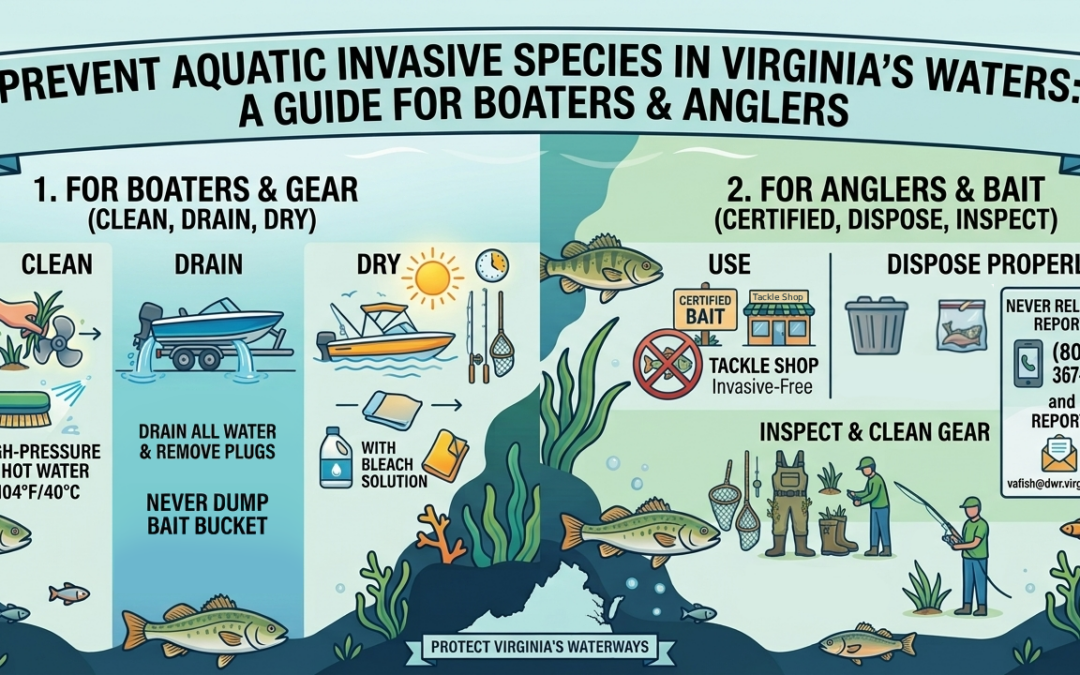
The #1 rule for anyone using Virginia’s waters is Clean, Drain, Dry. Invasive plants, mud, and tiny organisms can easily hitch rides on boat hulls, trailers, propellers, and inside hidden water compartments like bilges and live wells. Taking a few extra minutes to clear off debris, remove drain plugs, and let everything dry before moving to a new spot is a simple habit that stops the spread—whether you’re running a motorboat, paddling a kayak, or hauling a trailer.
Clean
- Remove all plants, mud, and debris from your boat, trailer, and equipment (anchors, ropes, fishing gear)
- Wash your boat with hot water (at least 104oF/40oC) or high-pressure water
- Use a sponge or brush to scrub hard-to-reach areas like crevices and propellers
Drain
- Drain all water from your boat, including:
- Motor
- Live Wells
- Bait Wells
- Bilge
- Remove drain plugs when leaving a waterbody
- NEVER dump your bait bucket water into the waterbody you’re leaving
Dry
- Let your boat and gear dry for at least 5 days in the sun before entering another waterbody
- If you can’t wait, use a towel to dry thoroughly or wipe down gear with a bleach solution (1 part bleach to 9 parts water)
For Fishing Gear and Bait:
Invasive species don’t just travel on boat hulls—they can easily hitch a ride in a bait bucket, on fishing tackle, or attached to your waders. Proper bait disposal and a quick gear check are simple, direct ways anglers can protect local fish populations and keep the river healthy.
Use Certified Bait
- Buy bait from certified, invasive-free shops to avoid accidentally introducing invasives
- Never use live bait from an infested waterbody
Dispose of bait properly
- Live baitfish should be either destroyed or held onto for future use
- Dead baitfish or leftover bait should be disposed of in a sealed container or bag then thrown into the trash
- Fishing tackle and hooks should be disposed of in covered containers
Inspect and Clean Gear After Use
- Check fishing nets, waders, boots, and other gear for plants or animals before moving to a new waterbody
- Clean gear with hot water or a bleach solution if moving between waterbodies
Never Release Fish or Plants
Do not release aquarium fish or plants into the wild as they can become invasive
Report invasive fish to Virginia DWR
- Phone: (804) 367-6913
- Email: vafish@dwr.virginia.gov