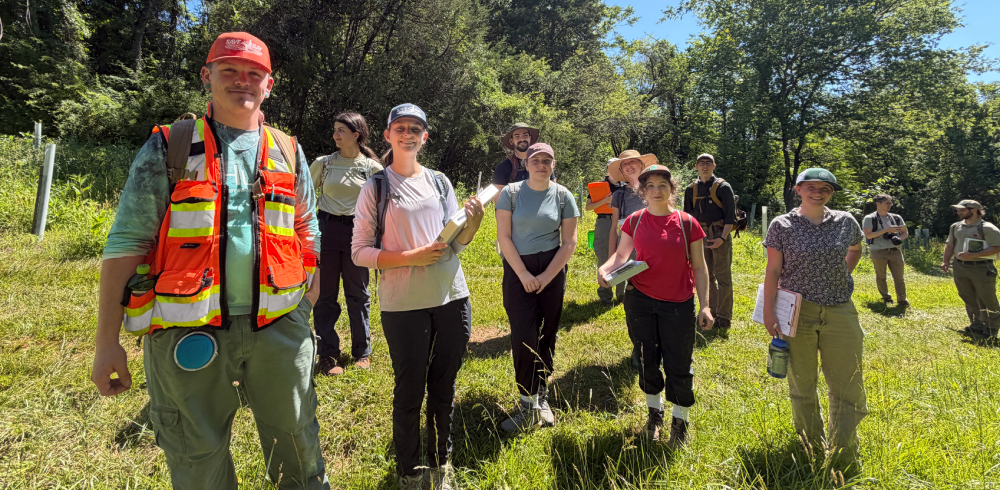
The James River Stewardship Program (JRSP) has just begun its fifth and biggest year of the Program! In year one, there were two interns in one region, in years two through four there were four interns in two regions each year, and this year we have expanded to six interns in three regions with the help of the Chesapeake Bay Foundation (CBF). The program is also being replicated in other watersheds.
Stewardship of riparian forest buffers has been consistently noted as a priority across partners, but most cost-assistance programs lack sufficient support for maintenance that is a key to a buffer’s success. The James River Association (JRA) and partners of the Upper and Middle James Riparian Consortium (Consortium) created the JRSP in 2022 to provide a solution to this problem. JRA, the Virginia Department of Forestry (DOF), Natural Resources Conservation Services (NRCS), and the Farm Service Agency (FSA), along with input for over a dozen partners of the Consortium’s implementation team, developed the JRSP to protect the investment in riparian forest buffers, ensure positive examples of the practice through stewardship, and provide technical assistance through summer internships.

Over 12 weeks this summer, six assistants will assess 600 acres of riparian forest buffers installed through various programs such as the Conservation Reserve Enhancement Program (CREP), Virginia Agricultural Cost-Share Program (VACS), and the James River Buffer Program (JRBP). Assistants Ben Uttenweiler and Violet Wiley are based out of the Louisa NRCS field office and will assess buffers in Albemarle, Fluvanna, and Nelson Counties. Alex Walitt and Gillian Honeycutt are based out of the Rustburg NRCS office and will assess buffers in Amherst, Appomattox, and Campbell counties. Lily Youngman and Onsley Baker are based out of the Lexington NRCS office and will assess buffers in Highland, Augusta, Bath, Rockbridge, and Alleghany counties. Our assistants in the Lexington NRCS office are also being supported and supervised by CBF. While JRA hired and trained Lily and Onsley, CBF is helping them to find buffers, review reports, and with other general support.
The JRSP is now being replicated in other watersheds! The Appalachian Conservation Corps and the Alliance for the Shenandoah Valley have hired two assistants, Amy and Angelica, to assess riparian forest buffers in the Shenandoah Watershed. The six JRA interns were able to meet up with Amy and Angelica a couple times during their training. The group practiced some native and invasive species ID together on the Chessie Trail in Lexington and learned how to perform buffer assessments at the riparian buffer at James Monroe Highland in Charlottesville.
The James River Stewardship Program is possible thanks to funding by Altria, National Fish and Wildlife Foundation, U.S. Department of Agriculture, U.S. Environmental Protection Agency, and the Virginia Department of Conservation and Recreation.
Meet JRA’s Six Seasonal Stewardship Assistants!
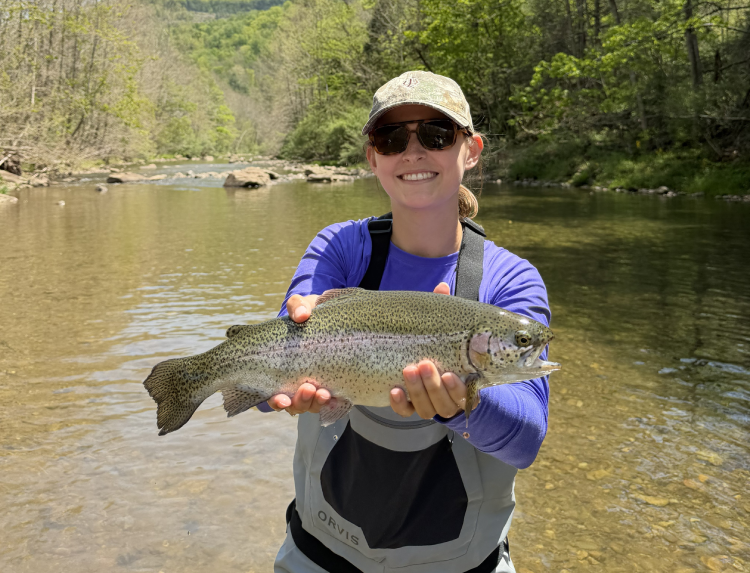
My name is Lily Youngman and I am from Lexington, VA! I am going into my senior year at Washington and Lee University where I am majoring in Environmental Studies and minoring in Ecology. I grew up in the James River Watershed, floating down the Maury River every summer, and fishing in the Cowpasture River with my college friends. Aside from my personal connection to the river, I have a deep interest in the environment and river ecosystems. Last summer I worked on a cattle ranch protecting the buffers from livestock, so I was excited about the opportunity to learn more about the native and invasive species in the buffers. My goal has always been to have a career that has a positive impact on the environment in some way. Currently, I am planning on going into non profit work and eventually pursuing environmental law. My favorite river activities are kayaking and fishing.

My name is Onsley Baker and I am from Rondo, VA! I am currently attending Mountain Gateway Community College where I am studying Forestry. My school sits on the Jackson River which merges with the Cowpasture River to create the beginning of the James River. This interaction with the river and having learned a lot about the forestry aspects of waterways lead me to be interested in interning with JRA. In the future, I am hoping to work in Forestry. While I am not sure in exactly what position I would like to work, I know that I want a career with boots on the ground work. My favorite river activities are fishing or just watching the water flow.
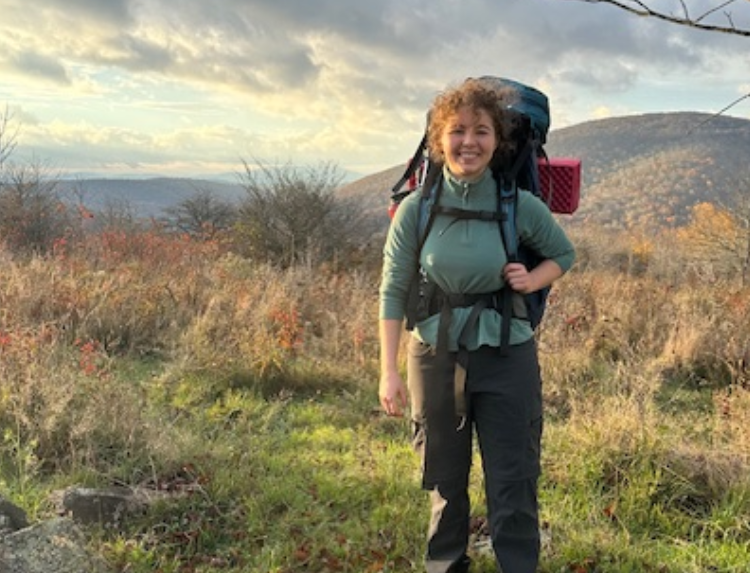
My name is Alex Walitt and I am from Arlington, VA! I am a rising senior at Virginia Commonwealth University pursuing a dual major in Environmental Studies and Urban and Regional Planning. I love the James River, so doing work that benefits its ecosystems is exciting for me. I was also interested in the prospect of working out in nature and learning more about Virginia’s plant life. While I am not entirely sure what career I would like to pursue in the future, I would like to work on projects that improve the health of Virginia’s natural ecosystems and/or work with communities to mitigate the environmental issues they are experiencing. My favorite river activities include white water rafting, if I am feeling adventurous, or paddleboarding. I also enjoy sitting on the riverbank and watching the sunset over the water.

My name is Gillian Honeycutt and I am from High Bridge, New Jersey. I am a rising senior at James Madison University, where I am majoring in Integrated Science and Technology (ISAT) with a concentration in Environmental Science. During college, I had a lab that introduced me to river work, and after this experience I knew that I wanted to do something with field work and rivers. Post college I hope to continue doing field work and have a positive impact on water quality in the Virginia area. My favorite river activities are sitting on the river bank with my family or swimming.

My name is Ben Uttenweiler and I am from Fairfax, Virginia. I am entering my fourth and final year of Environmental Studies at Virginia Commonwealth University. I like to spend my free time fishing for bass in the James River. I’ve always had a general passion for land stewardship, but spending three years in Richmond gave me a new appreciation for the challenges the James River faces and its natural beauty. I was attracted to the self directed, outdoor nature of the work and the opportunities to meet people from many different environmental NGOs/ Government agencies. After graduation, I would like to continue working outdoors doing land stewardship!
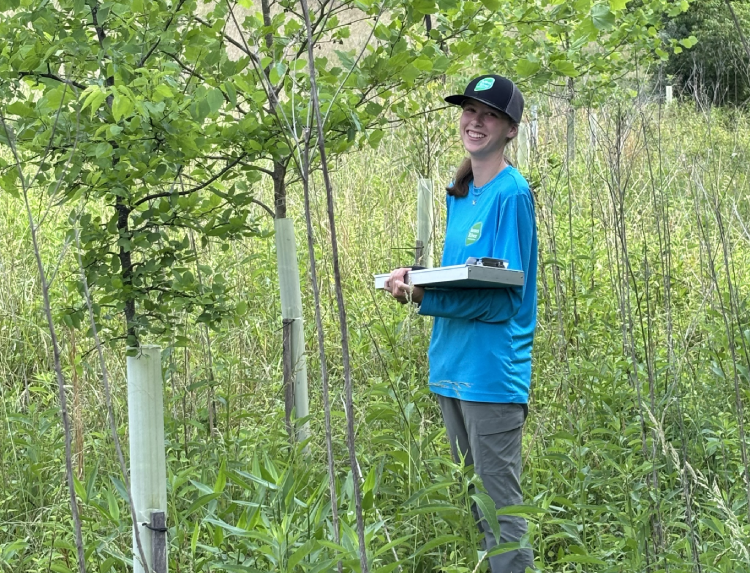
My name is Violet Wiley and I am from Charlottesville, Virginia! I am going into my second year at the University of Virginia where I am planning to double major in Environmental Thought and Practice and Economics. During high school I learned so much and gained valuable experience participating in JRA’s leadership program, so I knew that I would love to work with JRA again in the future. Additionally, I was interested in gaining a deeper understanding of the work JRA does across the watershed. In the future, I hope to go to law school and pursue a career in environmental law. My favorite river activity is kayaking or white water rafting.
For more information about maintenance and stewardship of riparian forest buffers visit https://jamesriverconsortium.org/landowner-resources/buffer-maintenance-stewardship/
This material is based upon work supported by the U.S. Department of Agriculture, under agreement number 0602.24.082681.
This project has been funded wholly or in part by the United States Environmental Protection Agency under assistance agreement LI-00A00694 to the National Fish and Wildlife Foundation. The contents of this document do not necessarily reflect the views and policies of the Environmental Protection Agency, nor does the EPA endorse trade names or recommend the use of commercial products mentioned in this document.
The views and conclusions contained in this document are those of the authors and should not be interpreted as representing the opinions or policies of the U.S. Government or the National Fish and Wildlife Foundation and its funding sources. Mention of trade names or commercial products does not constitute their endorsement by the U.S. Government, or the National Fish and Wildlife Foundation or its funding sources.