

The James River is home to a fascinating variety of turtles, each with unique adaptations and habitats. From the iconic snapping turtles to the elusive musk turtle, these reptiles play a vital role in the river’s ecosystem. Whether you’re a seasoned wildlife enthusiast or just curious about the creatures that call the James River home, this short guide will help you identify six common turtle species and where to spot them along riverbanks and in the water.
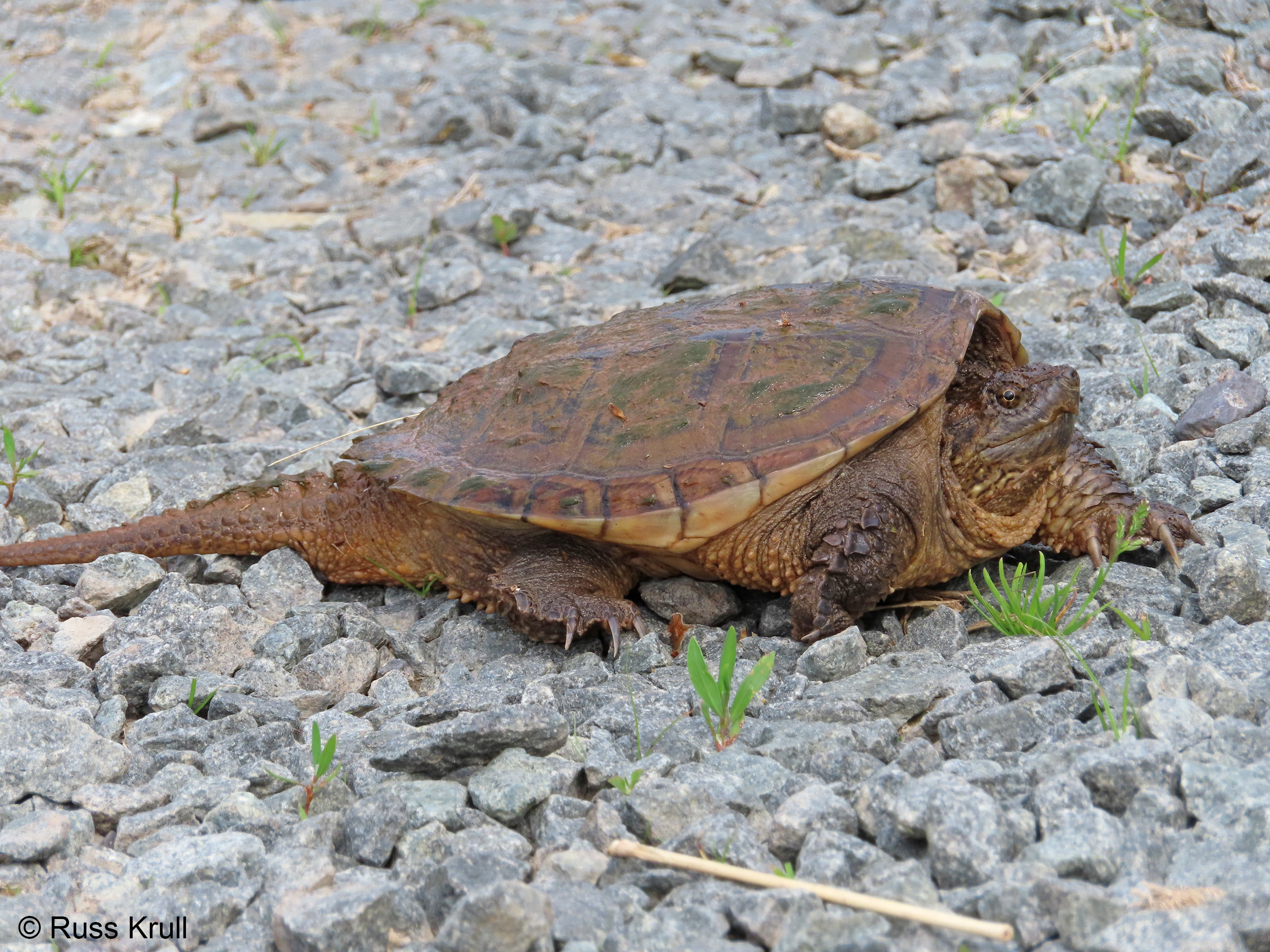
North American Snapping Turtle
- The North American Snapping Turtle is a large, heavy-bodied turtle with a long saw-toothed tail, rough carapace (shell), and a small plastron (bottom shell). Their head is often too big for their shell, giving them a prehistoric look. Adults commonly weigh 10-35 pounds and have a sharp, hooked beak.
- To spot a North American Snapping Turtle, look in slow-moving water, muddy bottoms, or along the riverbanks, especially in areas with soft substrates. They often bask near the water’s edge or partially submerged in vegetation. These ancient-looking turtles can be found in every region of the James River.
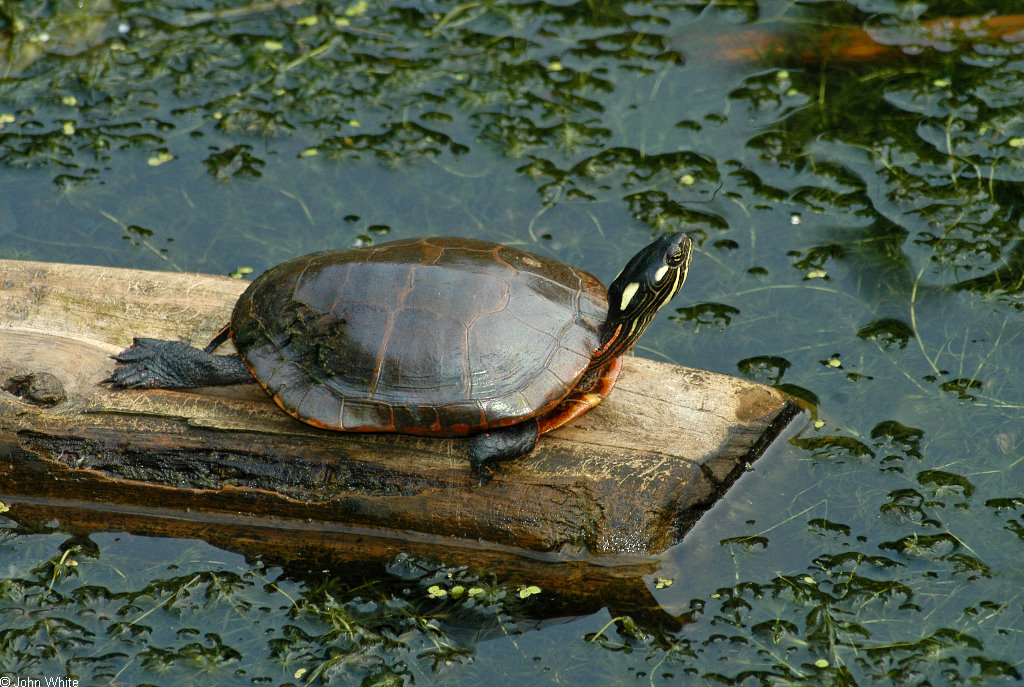
Eastern Painted Turtle
-
- The Eastern Painted Turtle is a small- to medium-sized turtle with a smooth, flat, dark green or black carapace edged with red or yellow. Their plastron is bright red or orange, and they have yellow stripes on their head, neck, and legs. Their shells often appear polished.
- To spot an Eastern Painted Turtle look for logs, rocks, or muddy banks in sunny areas as they like to bask in the sun. They prefer quiet, shallow waters with abundant aquatic vegetation in all regions of the James River.
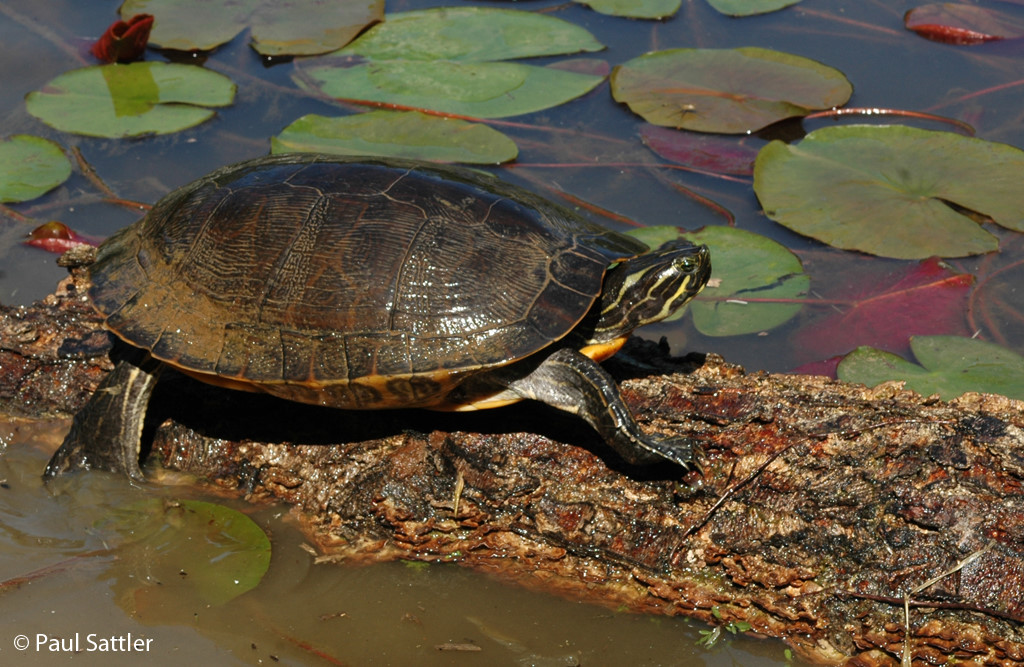
Eastern River Cooter
- The Eastern River Cooter is a large freshwater turtle with a broad, smooth, olive-brown to dark green carapace marked with intricate yellow or orange patterns. Its plastron is yellow with dark, often symmetrical blotches. The head and legs are striped with yellow, and it has a small, seemingly undersized head relative to its body. Adult females grow significantly larger than males, reaching 12-16.5 inches in carapace length.
- To spot an Eastern River Cooter look for slow- or moderate-moving rivers and streams with abundant vegetation. They love to bask on logs and rocks in sunny areas often near the shoreline in the Middle and Lower regions of the James River.
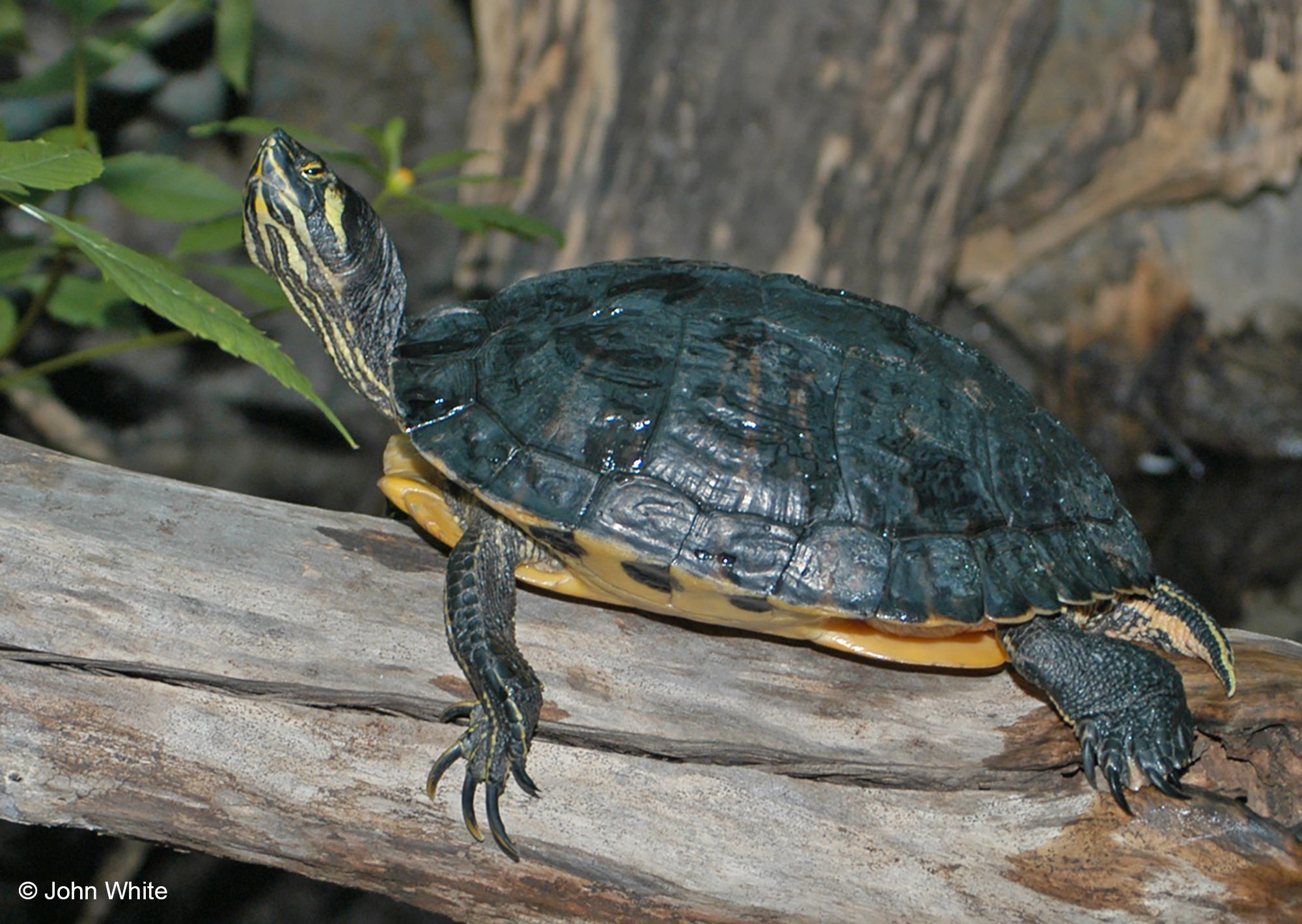
Yellow-Bellied Slider
- The Yellow-Bellied Slider is a medium-sized turtle with a dark green carapace marked with yellow stripes. Its plastron is bright yellow with dark, often symmetrical blotches. The head and legs are striped with yellow, and it has a distinctive yellow stripe behind each eye.
- To spot a Yellow-Bellied Slider, look for shallow waters with abundant aquatic plants such as marshy areas. They are often found basking on rocks, logs, or vegetation near the shore. These highly adaptable turtles are most active during warmer months and can be found throughout the Middle and Lower James River regions.
Woodland Box Turtle
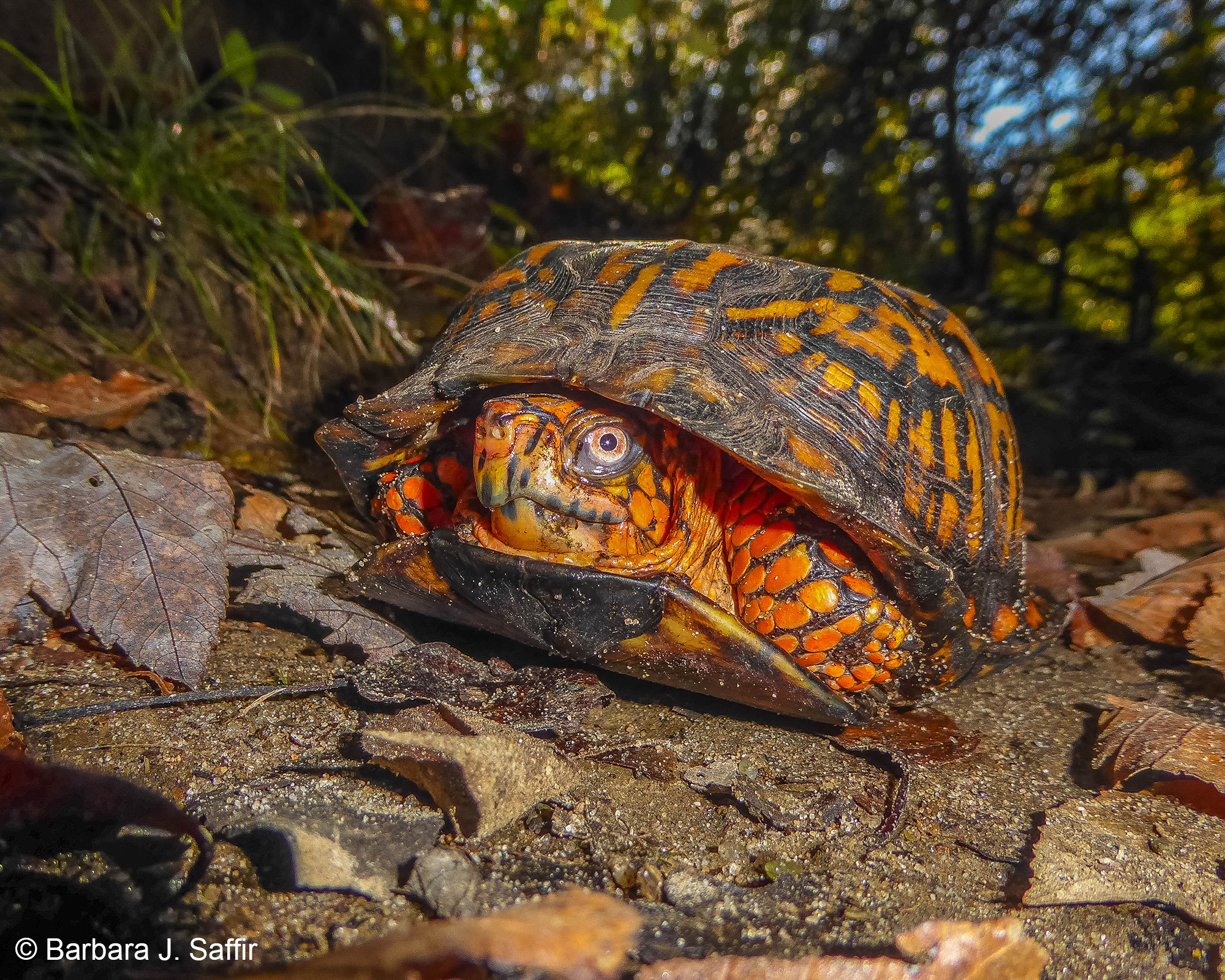
- The Woodland Box Turtle is a small, terrestrial turtle with a highly domed, dark brown or black carapace marked with yellow to orange blotches. Their plastron is hinged, allowing them to close their shell tightly. Their legs are stout and often brightly colored with red or yellow scales.
- To spot a Woodland Box Turtle, look in wooded areas, meadows, or along riverbanks, especially in moist, shaded environments. They are often seen after rain or in the early morning. Unlike aquatic turtles, they spend most of their time on land, so keep an eye out during a hike in the Upper and Middle regions of the James River!
Eastern Musk Turtle
- The Eastern Musk Turtle is a small, freshwater turtle with a smooth, elongated shell that ranges from a dark brown to black, often with faint streaks or spots. Its plastron is small and yellowish, with skin visible between the scutes. They have two distinct yellow or white stripes on each side of their head, meeting at the snout, and a pair of barbels (fleshy projections) on their chin and neck. When threatened, they release a strong, musky odor.
- To spot an Eastern Musk Turtle keep an eye out in slow-moving, vegetated areas with soft, muddy bottoms like swamps, as this turtle almost never leaves the water. They love hiding in crevices, under rocks, or buried in organic debris. While they occasionally bask, they’re more often spotted swimming or foraging near the riverbed in all regions of the James River.
500.jpg "Eastern Musk Turtle")
Ready to meet these turtles in person? Join the James River State Park for their “Turtle Time” event on August 8th, 2026, where you can meet experts, see live turtles, and discover how to protect these amazing creatures. Whether you’re exploring the river or visiting a local park, keep an eye out for these fascinating reptiles, especially since they’re a vital part of the James River’s ecosystem!
Resources:
- Turtles of Virginia – Virginia Herpetological Society
- Turtles of Virginia – Herping VA
- North American Snapping Turtle – DWR Virginia
- Eastern Painted Turtle – DWR Virginia
- Eastern River Cooter – DWR Virginia
- Yellow-Bellied Slider – DWR Virginia
- Woodland Box Turtle – DWR Virginia
- Eastern Musk Turtle – DWR Virginia