
August is National Water Quality month, and what better way to celebrate than by learning about JRA’s GIS and Water Quality Manager, Michael Gillert?
As the backbone of the James River Watch program, Michael guides volunteers in gathering bacteria samples at various public entry points to the James River and helping provide the results. The James River Watch program was built to help inform the general public about the quality of water in the James River for recreational activities. Without this program, we would have more difficulties in understanding what areas of the James River need extra attention and care, further pushing our goals of achieving a healthier river.
This week, we sat down with Michael to talk about the water quality of the James River and why this work is important.
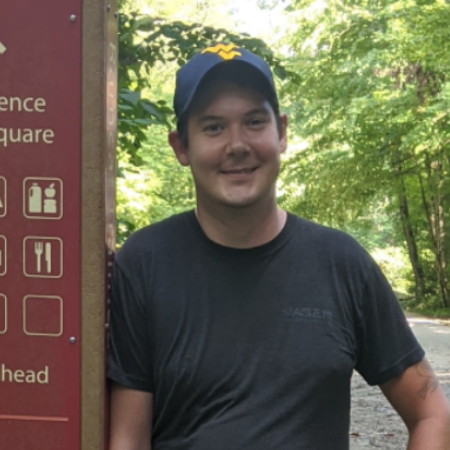
Q&A with Michael Gillert
What is your background?
Michael: I studied Natural Resources and Wildlife Technology at Garrett College in western Maryland and got quite a bit of hands-on experience with pollution impacts on waterways and watersheds as well as water quality testing and GIS (Geographic Information Systems). After that, I spent a year at the University of Richmond getting a GIS Professional Certificate.
Why is this work important to you?
Michael: The first few years I lived in Richmond, I was lucky enough to live in Oregon Hill within walking distance of the James River. I spent countless hours at Belle Isle and on the Buttermilk and North Bank Trails, gaining a lifelong appreciation for the James River.
I believe that natural resources like the James River should be safely enjoyed by all people as often as possible, and water quality testing is an important component of allowing people to appreciate and enjoy the river.
What’s the biggest challenge of your position?
Michael: The James River watershed is about 10,000 square miles with hundreds of public access points that people use every day. This biggest challenge is coordinating our amazing volunteers and logistics of the water quality program over such a large area without actually being able to be physically present at the majority of our monitoring sites.
How do you ensure the data collected is accurate?
Tom: Every year before James River Watch begins, we offer multiple virtual training sessions as well as opportunities for in-person demonstrations of the data collection and water sampling process. All participants are provided with training resources before they begin sampling and also every week that they are scheduled to monitor water quality at their respective sites. I also make myself fully available to people via phone, text, and email so that I can walk them through any step of the process they might be uncertain about.
Broadly speaking, how is the water quality of the James?
Michael: It’s difficult to assess the entire watershed as one entity because of how large it is and the fact that it spans three very different physiographic regions of Virginia. The watershed is quite diverse as far as geography, geology, development, etc.
Overall, our data shows that the James River and its tributaries have safe levels of bacteria about 85% of the time overall since 2013.
Looking at the last few years of data, what are we seeing?
Michael: The past few years have seen water quality slightly decline overall due to more frequent, intense storms and precipitation events in the summer and also due to several instances of infrastructure failure at various locations throughout the watershed. These issues highlight the fact that there is quite a bit of work still to do as far as stormwater management, infrastructure upgrades, and pollution mitigation through the planting of riparian buffers, especially in urban areas and areas with numerous large-scale agricultural operations.
Are there particular areas the water quality is better or worse, and why?
Michael: In general, the areas with worse quality are the sites in the City of Richmond that are downstream of Combined Sewer Outfalls, and also a couple of sites near Williamsburg that have seen elevated levels of bacteria nearly every week for the past several years, likely due to aging or broken infrastructure, but the source has yet to be determined.
The areas with the best water quality are sites that are more remote and nowhere near urban or agricultural areas such as the Goshen Pass Wayside or the Hardware River boat ramp.
What type of impacts would it have if our water was cleaner?
Michael: In my opinion, the greatest benefit would be people being able to enjoy one of Virginia’s greatest natural resources with peace of mind. The more people that enjoy and appreciate the river, the more people we have to appreciate our natural world and to advocate for the conservation and preservation of the river and all of its tributaries and all of the wildlife and ecosystems that depend on it.
See the Testing Process in Action
What happens after a James River Watch volunteer collects a water sample? In the Instagram video below, Michael walks viewers through the testing process step by step, from preparing the sample to determining its bacteria level. The video offers a behind-the-scenes look at the careful procedures that help ensure James River Watch results are accurate, consistent, and useful to the public.
Michael’s work—and the commitment of James River Watch volunteers throughout the watershed—helps turn individual water samples into information that thousands of people can use. By tracking conditions over time, the program helps river users make more informed decisions while also highlighting broader challenges related to stormwater, infrastructure, and pollution. This National Water Quality Month, we are grateful for the staff, volunteers, and partners working each week to better understand the James and move us closer to a healthier river.