
Spring is the perfect time to celebrate native plants. What better way to embrace the season than by enhancing your landscape with these essential species! While non-native and invasive species offer little ecological value and can even cause harm to natural resources, native plant species are essential for supporting healthy, biodiverse ecosystems. Native plants provide food and habitat for wildlife including insects, local and migratory birds, and mammals. Native plants are also adapted to Virginia’s environmental conditions, requiring less water, fertilization, and application of herbicides and pesticides compared to non-natives – saving you resources and reducing the amount of polluted runoff entering our watershed. Below we’ve offered suggestions for native plant alternatives to common non-native and invasive species still commonly found in landscapes across Virginia. For more information on what regionally native plants to incorporate into your landscape this spring, be sure to reference the Digital Atlas of the Virginia Flora. Happy planting!

Pledge Now
Simple changes on your property like installing a rain barrel, planting native plants, or creating a rain garden, all support our waterways!
Trees
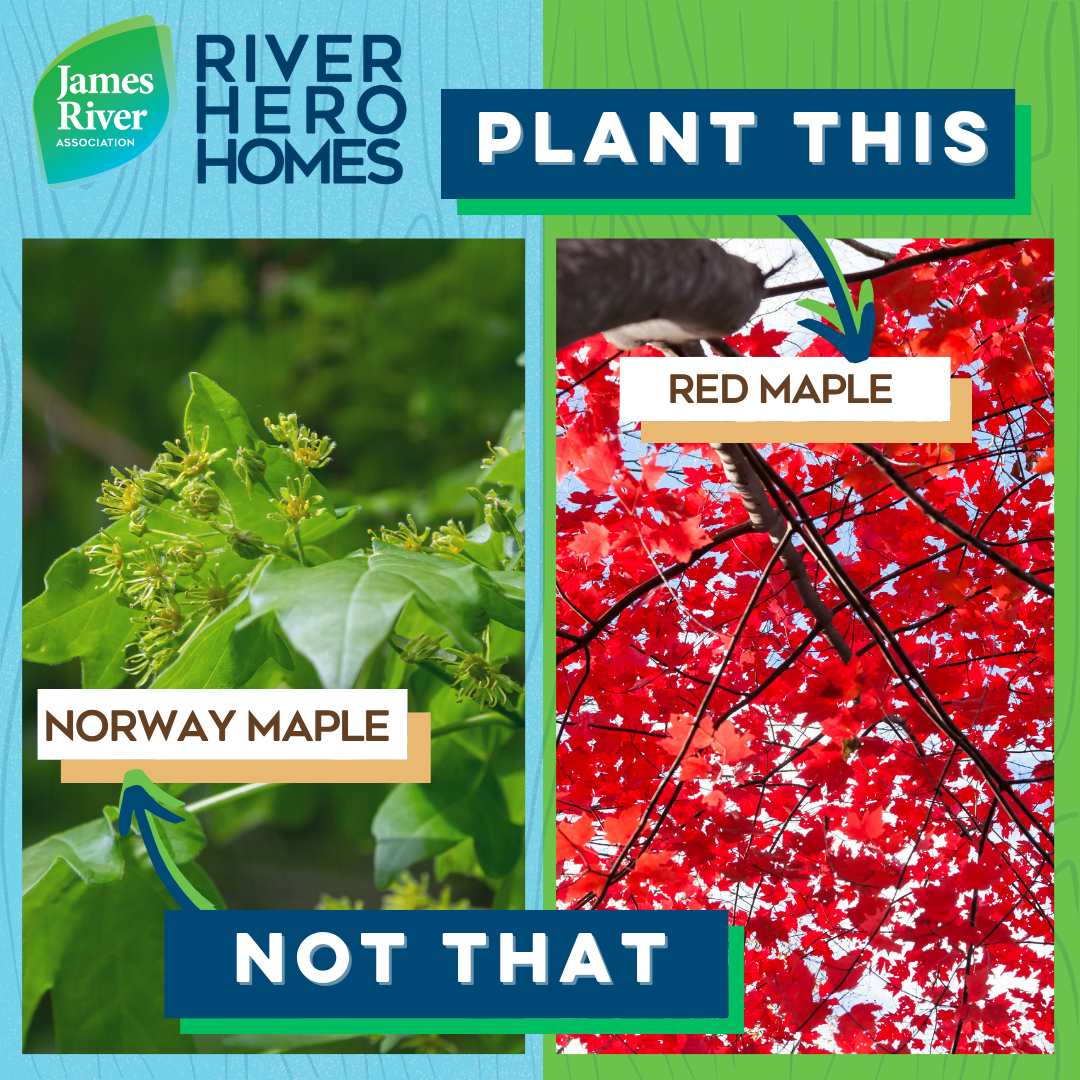
The Norway maple (Acer platanoides) is a non-native deciduous tree species introduced to the United States in the 1700s from Northeastern Europe. In Virginia, they spread aggressively and vigorously, outcompeting native trees mainly due to high environmental tolerance and rapid seed dispersal. These trees also have weak wood that is susceptible to breaking during storms and high winds.
Plant This! If you are looking for a hardy, fast-growing tree with beautiful foliage, consider the red maple (Acer rubrum). These trees can grow up to 40-70 feet tall and feature striking red leaves in the fall and reddish flowers in the spring. They also provide value to local wildlife, providing flower nectar for bees, habitat for the imperial moth (Eacles imperialis), and seeds that are enjoyed by birds.
Shrub
Butterfly bush (Buddleia davidii) is an invasive shrub in Virginia that was originally introduced from its native range in China for its ornamental value. While this plant is still commonly recommended to support native butterflies, it does not serve as a host plant for their larvae. It has an aggressive growth habit, invading natural habitats and displacing native plants. Once established, it forms dense, shrubby thickets.
Plant This! If you’re interested in planting an eye-catching shrub that supports a wide variety of different pollinators, consider planting native buttonbush (Cephalanthus occidentalis)! This deciduous, perennial shrub prefers moist to wet soil and is tolerant of heat and soil compaction. Buttonbush features unique, pincushion-like white flowers that are fragrant and bloom from June-September. Buttonbush is the larval host for the titan sphinx moth (Aellopos titan) and the hydrangea sphinx moth (Darapsa versicolor). Its nectar also attracts a variety of bees and butterflies.

Vine
Japanese honeysuckle (Lonicera japonica) is an invasive vine native to Virginia, known for its fragrant white or yellow flowers. This perennial’s prolific growth and rapid climb smothers and strangles native trees, forming mounds. Their aggressive spread is caused by seed dispersal of animals and vegetation growth through rhizome layering. Rapid regrowth can result from root fragments left by mechanical pulling or cutting.
Plant This! Coral honeysuckle (Lonicera sempervirens) is a colorful, flowering vine with a sweet fragrance – perfect to plant this spring. The vine can grow up to 20 feet tall and produces red berries in the summer. Its red flowers and berries attract bees, hummingbirds, songbirds, moths, and butterflies. Coral honeysuckle is an essential source of food for hummingbirds and songbirds.

Herbaceous Plant
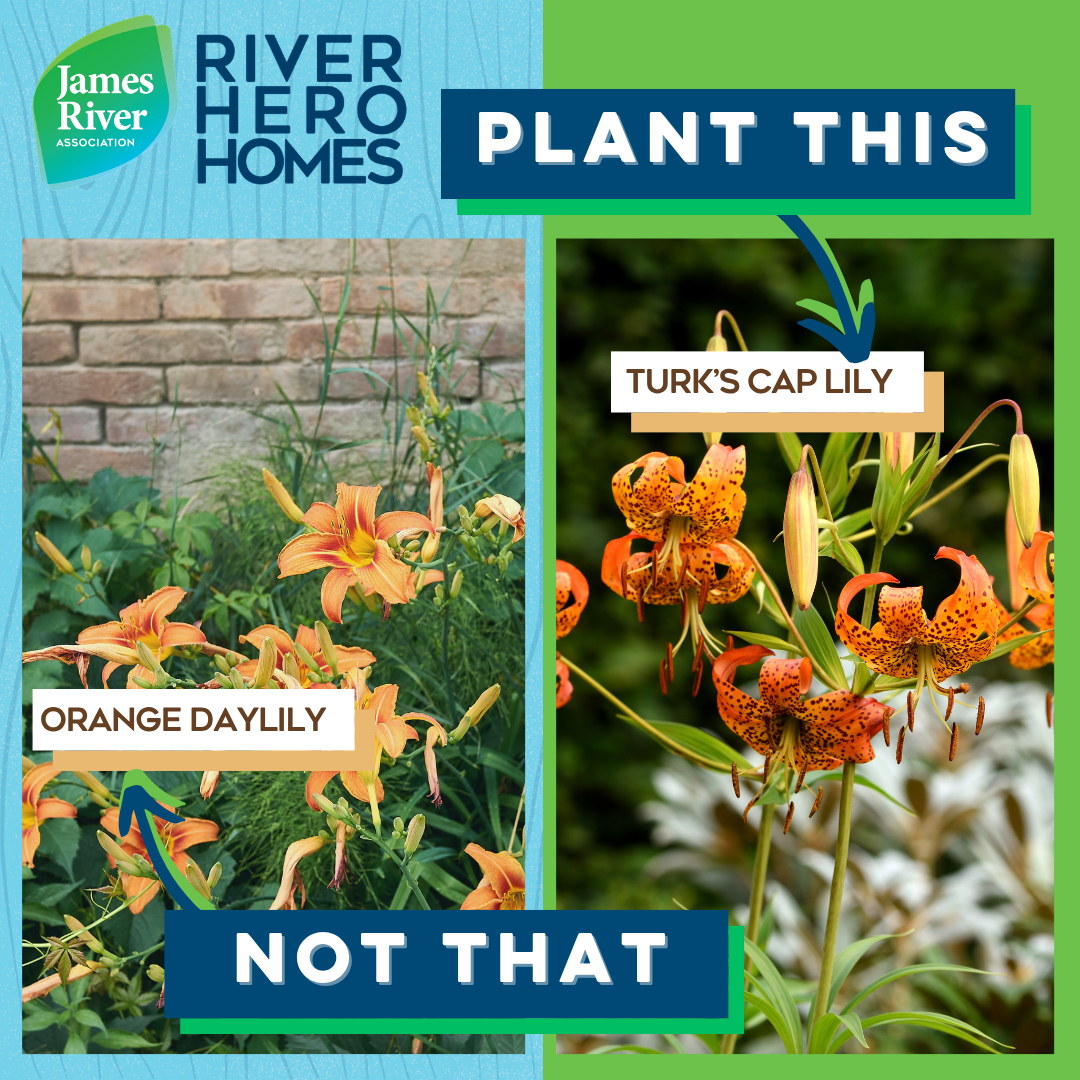
The Orange daylily (Hemerocallis fulva) is an herbaceous plant that has become popular due to its bold flowers and hardiness. However, it is invasive in Virginia and can pose an ecological threat once it spreads and establishes in natural areas. Established daylilies spread to form dense patches that can displace native plant species. The removal and ongoing control of this plant is a challenge due to its thick tubers.
Plant This! Consider planting the native Turk’s cap lily (Lilium superbum) this spring. These plants offer vivid red, orange, and yellow flowers from July through September. The Turk’s cap lily is also the largest lily in North America, with up to 40 flowers recorded on a single plant! These flowers offer wildlife value to pollinators like the Ruby-throated hummingbird (Archilochus colubris) and the Eastern tiger swallowtail (Papalio glaucus).
Grass
Chinese silvergrass (Miscanthus sinensis) is a perennial, ornamental grass native to Asia. This grass has a clumping habit and can be 4-6 feet wide and 4-12 feet tall at maturity and is adaptable to different soil conditions. Its seeds are disseminated by the wind, which contributes to its invasive nature. Once established, Chinese silvergrass forms a large rhizomatous root mass, which makes it challenging to remove.
Plant This! If you’d like to plant a larger ornamental grass in your landscape, consider switchgrass (Panicum virgatum)! This Virginia native grass can grow 3-4 feet wide and around 7 feet tall. It offers year-round interest – showcasing bright greenish-blue leaves during the summer with flower clusters that resemble clouds. In the fall, switchgrass turns a beautiful yellow-gold color. Switchgrass attracts birds and butterflies and is the host plant for the Delaware Skipper (Anatrytone logan) and the Dotted Skipper (Hesperia attalus).

Looking for Native Plants?
Members of the James River Association’s River Hero Homes program are eligible for discounts on plant purchases at the following nurseries.
- Colesville Nursery (Ashland)
- Fiddlehead (Richmond)
- Forest Lane Botanicals (Williamsburg)
- Good Seed Natives (Richmond)
- Hummingbird Hill Plant Nursery (Crozet)
- Local Ecotype Richmond Natives (Richmond)
- Moulton Native Plants (Richmond)
- Sandy’s Plants, Inc. (Mechanicsville)
- SiteOne Landscape Supply (Glen Allen)
- Sneed’s Nursery (Richmond)
- Undoing Ruin (Richmond)